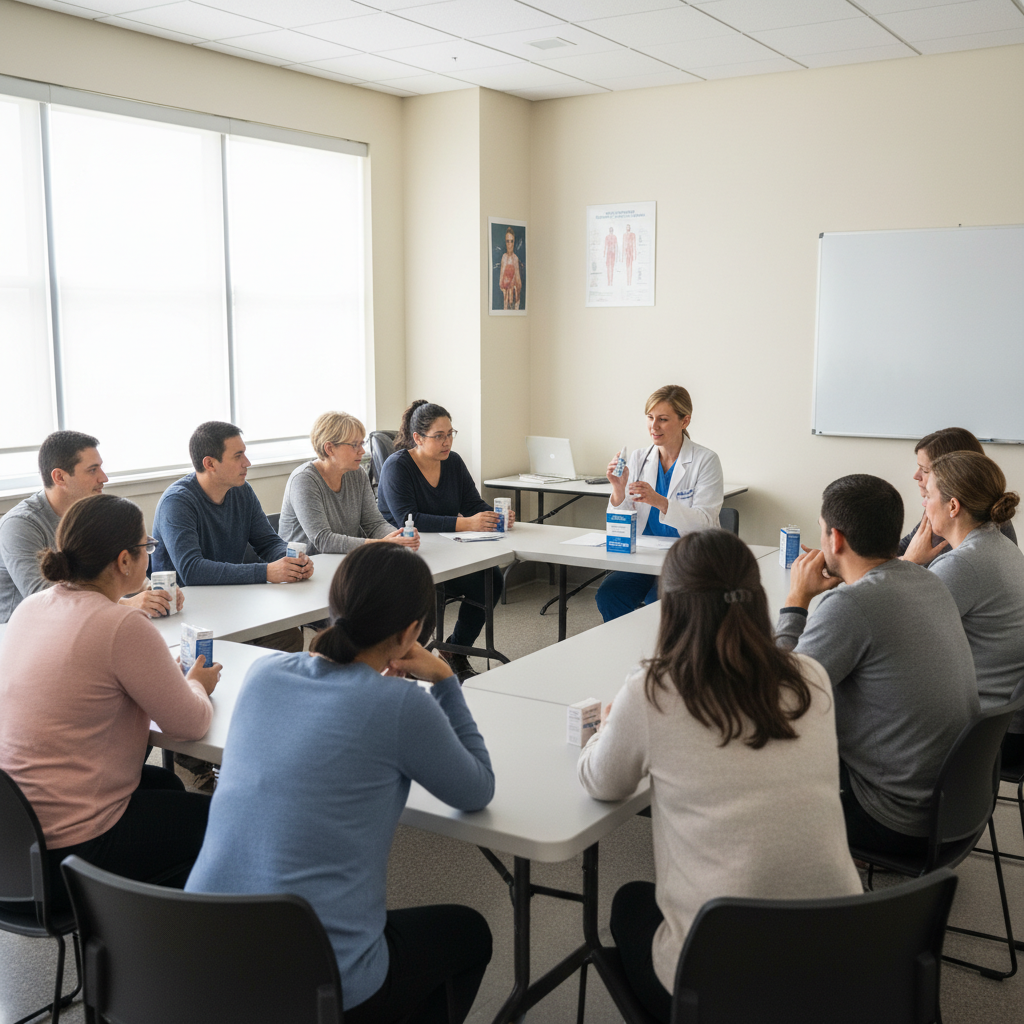
Seconds matter in an opioid emergency. Opioid overdose prevention naloxone is about being ready before a crisis, then acting fast when it counts. This complete, plain‑English guide shows you exactly how to spot an overdose, give naloxone with confidence, and keep someone breathing until help arrives—while understanding how Road To Recovery’s same‑day Opioid Agonist Therapy (OAT) and mental health coordination can stabilize recovery after the scare.
Summary
- What you’ll learn: recognition signs, step‑by‑step naloxone use, breathing support, and what to do next.
- Why it matters: today’s unregulated supply (fentanyl, analogs, xylazine) makes overdoses faster and deadlier.
- Local reality: free kits are common across Ontario; our clinics help pair kits with treatment the same day you’re ready.
- Beyond the crisis: OAT options (Methadone, Suboxone, Sublocade, Kadian) plus psychiatry referrals (CAMH and OTN partners) support long‑term stability.
Quick Answer
Opioid overdose prevention naloxone means carrying naloxone and knowing how to use it to reverse life‑threatening overdose. Across Ontario, Road To Recovery helps people turn reversal into recovery with same‑day OAT intake and judgment‑free mental health support.
Above the Fold: Hook + Table of Contents
Here’s the thing—panic wastes precious seconds. A simple, practiced plan saves lives. Use this roadmap:
- What Is It? Clear definition and why prevention beats reaction.
- Why It Matters in 2026 (fentanyl, polysubstance, xylazine).
- How It Works (what naloxone does—and doesn’t do).
- Types & When to Use (nasal spray vs. injection, kit essentials).
- Step‑by‑Step Response you can rehearse today.
- Best Practices for homes, workplaces, schools, shelters.
- Tools & Resources including same‑day OAT and mental health referrals.
- Mini Case Examples from real Ontario settings (anonymized).
- FAQs to answer common what‑ifs quickly.
- Key Takeaways + Next Steps to lock in your plan.
What Is Opioid Overdose Prevention With Naloxone?
Prevention combines preparation with fast, confident action. Naloxone is a medication that temporarily blocks opioids at brain receptors, reversing slow or stopped breathing. It works on fentanyl, heroin, oxycodone, hydromorphone, morphine, and other opioids.
- Core idea: keep naloxone nearby, know the steps, and act immediately if breathing slows or stops.
- Bridge, not destination: naloxone buys time. Long‑term recovery often needs OAT, counseling, and mental health care.
- Ontario access: community pharmacies and harm‑reduction programs supply free kits; our team helps you find what’s closest.
Common Overdose Signs
- Unresponsive to voice or pain; you can’t wake them
- Slow, irregular, or no breathing; snoring or gurgling sounds
- Pale, clammy skin; bluish lips or fingertips
- Pinpoint pupils (very small)
- Weak pulse or very slow heartbeat
Prevention vs. Reaction
- Prevention mindset: carry a kit, walk through the steps monthly, and talk openly with family or roommates.
- Reaction alone is risky: hesitation eats minutes; prevention turns fear into muscle memory.
- Recovery link: after reversal, same‑day OAT lowers repeat overdose risk by easing withdrawal and cravings fast.
Why It Matters in 2026
The landscape has shifted. Synthetic opioids are potent in tiny amounts, and polysubstance mixes complicate response. Preparation isn’t optional anymore—it’s essential.
- Potency and speed: fentanyl and analogs can depress breathing within minutes; nearby naloxone changes outcomes.
- Polysubstance reality: many overdoses involve multiple drugs; naloxone still targets the opioid piece and should be given.
- Emerging adulterants: xylazine (a sedative) doesn’t respond to naloxone, but you still give naloxone to reverse the opioid component.
- From crisis to care: our clinics streamline a same‑day path into OAT and mental health support so the next day is safer than the last.
How Naloxone Works (Plain English)
Naloxone is an opioid antagonist—it “kicks opioids off” their receptors so the brain can restart normal breathing. It’s fast, targeted, and safe to use when you suspect opioids.
- Onset: usually 2–3 minutes for nasal spray; often sooner with intramuscular injection.
- Duration: 30–90 minutes. Effects can wear off while long‑acting opioids remain—watch for re‑sedation.
- Safety: if opioids aren’t the cause, naloxone won’t harm the person; it may trigger short‑term withdrawal symptoms if they’re opioid‑dependent.
What Naloxone Doesn’t Do
- It doesn’t reverse non‑opioid sedation (alcohol, benzodiazepines, xylazine). Still give it if you’re unsure.
- It isn’t a replacement for emergency care. Always call 911 and keep monitoring.
- It isn’t long‑lasting; repeat dosing may be needed until help arrives.
Types of Naloxone, Kits, and When to Use Them
Choose the format you’ll use confidently under stress. Both work. Practice is what makes the difference.
| Form | How it’s given | Pros | Considerations |
|---|---|---|---|
| Nasal spray (prefilled) | Spray into one nostril | Simple; needle‑free; fast for beginners | May need repeat doses with strong opioids |
| Intramuscular (IM) injection | Inject into thigh or upper arm | Rapid effect; common in community kits | Requires needle comfort and safe disposal |
Naloxone Kit Essentials
- 2–3 naloxone doses (sprays or vials with syringes)
- Gloves and alcohol wipes
- Breathing barrier (pocket mask) for rescue breaths
- Simple instruction card and emergency numbers
- Small flashlight or phone light for low‑light checks

Step‑by‑Step: What To Do in a Suspected Opioid Overdose
Use the same order every time. Rehearse monthly so your hands know what to do.
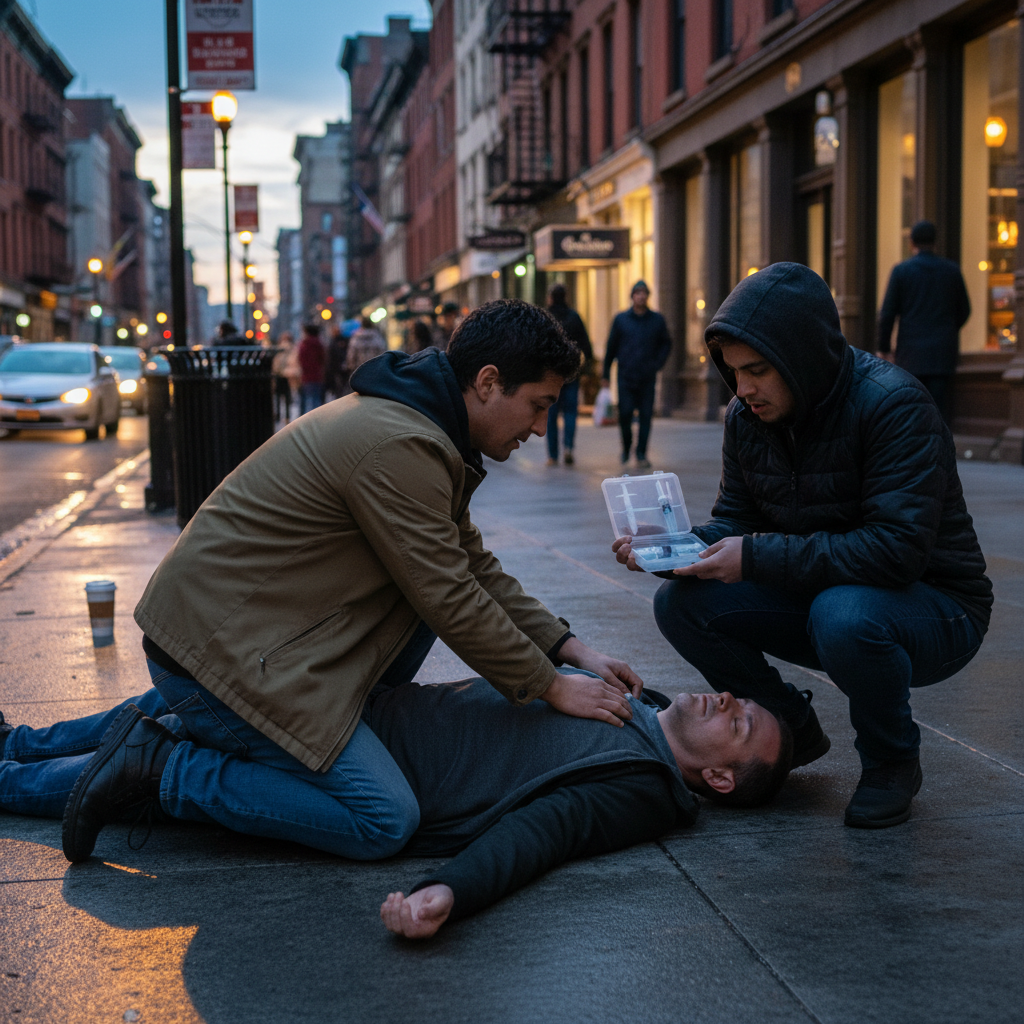
- Check responsiveness and breathing. Shake the shoulder, shout their name, look for chest rise. If not breathing normally, assume overdose.
- Call 911 (or local emergency number). Put the phone on speaker. Say “possible opioid overdose; slow or no breathing.”
- Give naloxone (dose 1).
- Nasal spray: insert tip into nostril, press plunger fully.
- IM injection: inject into mid‑thigh through clothing if needed.
- Support breathing. If trained, give one rescue breath every 5–6 seconds using a barrier device.
- Reassess at 2–3 minutes. If no improvement, give a second dose. Repeat every 2–3 minutes if needed.
- Recovery position. If breathing resumes but they’re not fully awake, roll them on their side with the top knee bent, head tilted to keep the airway open.
- Stay and monitor. Effects can wear off; watch for slowed breathing returning until help arrives.
Overdose Response Timeline (At a Glance)
| Time | Action | Goal |
|---|---|---|
| 0:00 | Assess, call 911 | Activate help; confirm no/slow breathing |
| 0:30 | Naloxone dose 1 | Start reversal |
| 2:30 | Reassess; dose 2 if needed | Maintain breathing |
| Ongoing | Rescue breaths; recovery position | Protect airway, support oxygen |
Best Practices That Save Lives
- Carry kits where life happens: backpack, coat pocket, car glove box, first‑aid station, bedside drawer.
- Practice with your kit: open it, handle the device, visualize the steps twice a month.
- Use clear language: during emergencies say “I’m giving naloxone now,” “Call 911,” “Start rescue breaths.”
- Expect multiple doses: with fentanyl and long‑acting opioids, repeat dosing every 2–3 minutes may be required.
- Aftercare is essential: withdrawal can feel rough—offer reassurance, warmth, and a quiet space.
- Plan the next step: discuss same‑day OAT and mental health support while motivation is high.
- Pair with treatment: see how OAT works in our Opioid Agonist Therapy guide and decide which path fits.
Household Overdose Action Plan (Template)
- Who carries the kit? List two names and backup locations.
- Who calls 911? Save your address and nearest intersection in the phone.
- Who meets paramedics? Assign someone to the lobby, hallway, or curb.
- Rescue breaths: Identify who’s comfortable using a pocket mask.
- Post‑event plan: Decide in advance to contact our clinic for same‑day intake.
Workplace & School Readiness
- Stock locations: first‑aid room, front desk, security post, campus residence office.
- Training cadence: 15‑minute refreshers quarterly; practice with demo devices.
- Clear signage without stigma: “Emergency supplies available here.”
- Confidential follow‑up: offer information on medication‑assisted treatment benefits rather than policing.
Tools and Resources (Ontario‑Focused)
Help is strongest when naloxone and treatment options work together. Our clinics connect people to both across Toronto, Barrie, Brampton, Brantford, Hamilton, Newmarket, Orillia, and Sault Ste. Marie.
- Medication‑assisted treatment: Methadone, Suboxone, monthly Sublocade, and Kadian are available across our network.
- Mental health coordination: psychiatry referrals can be arranged locally or virtually with trusted partners.
- Same‑day intake for OAT: new patients meet a nurse and then a physician the day they start.
- Family‑centered resources: practical guides for loved ones supporting someone at risk.
- Naloxone access: community pharmacies and harm‑reduction programs provide free kits; our team can help locate the nearest option.
- Harm reduction supports: learn about safer options in our Safer Opioid Supply overview.
Our team can help you stabilize with OAT and personalized supports. Bring your questions—withdrawal worries, work schedules, transportation—we’ll map a plan that fits real life.
Choosing OAT After a Reversal: Practical Paths
- Suboxone (buprenorphine/naloxone): often preferred for flexibility and safety; good for many starting recovery.
- Methadone: reliable for people with higher tolerance or complex histories; supports steady daily structure.
- Sublocade: monthly buprenorphine injection for people who want fewer clinic visits.
- Kadian (slow‑release morphine): a tailored option in specific clinical contexts.
Trying to decide? See our comparison in Suboxone vs. Methadone or talk to our team about personal goals, routines, and prior experiences.
Harm Reduction Habits That Work in Real Life
- Don’t use alone: arrange a check‑in or use supervised settings when possible.
- Test doses first: unknown potency calls for a smaller initial amount.
- Carry two kits: strong opioids often need more than one dose.
- Mind temperature: avoid leaving kits in freezing cars or hot windowsills.
- Set a refill reminder: check expiry dates every three months.
Mini Case Examples (Anonymized)
- Downtown Toronto apartment: Roommate found unresponsive with shallow breathing. A nasal spray was given, rescue breaths started, and the person revived within two minutes. They began Suboxone the same day and arranged virtual psychiatry follow‑up.
- Hamilton workplace: Co‑workers used a kit from the first‑aid cabinet. Two doses were required due to suspected fentanyl. The individual later chose Methadone to reduce cravings and stabilize routine.
- Barrie family home: Parent administered naloxone to an adult child, then used the recovery position. After EMS assessment, the family connected with our team for ongoing OAT and counseling resources.
Local Tips
- Tip 1: In busy downtown spots like Yonge & Dundas or St. James Town, identify a landmark so a teammate can guide paramedics fast.
- Tip 2: Ontario winters are harsh—store kits at room temperature when you can and recheck after deep freezes or heat waves.
- Tip 3: Driving the 400‑series between Barrie, Brampton, and Hamilton? Keep a glove‑box kit and review your action plan before long trips.
IMPORTANT: Ask our clinicians to tailor tips to your home, school, or workplace layout.
Frequently Asked Questions
How do I know it’s an opioid overdose and not something else?
If they’re unresponsive with slow or stopped breathing and pinpoint pupils, assume opioids are involved and give naloxone. It won’t harm them if you’re wrong. Always call 911 and support breathing.
How many doses of naloxone might be needed?
With potent opioids like fentanyl, more than one dose is common. Give a second dose at 2–3 minutes if there’s no improvement, and keep monitoring until help arrives.
What if xylazine is present?
Naloxone won’t reverse xylazine itself, but it still treats the opioid component. Continue naloxone dosing, support breathing, and seek emergency care.
Can I start treatment the same day after an overdose scare?
Yes. Our clinics triage new OAT patients with a nurse and then a physician the same day you begin, helping reduce the chance of another overdose.
Does naloxone encourage riskier use?
Evidence shows making naloxone available does not increase risky behavior. It provides a safety net during a high‑risk period and often motivates people to seek treatment.
Key Takeaways
- Be ready: keep naloxone where you live, work, and travel.
- Act fast: recognize signs, call 911, give naloxone, support breathing, repeat if needed.
- Stabilize: move from reversal to recovery with same‑day OAT and mental health support.
- Stay connected: explore recovery options that fit your routine.
Conclusion: Turn Preparation Into Protection
- Carry and practice: confidence comes from rehearsal, not reading.
- Protect the airway: breathing support matters as much as the medicine.
- Plan your next step: pair kits with a same‑day path into OAT and mental health care.
We’re here to help you move from crisis to care—confidentially, without judgment, and on your timeline. If opioid overdose prevention naloxone is already in your toolkit, let’s add a treatment plan that keeps you safer tomorrow than you were today.
Next step: Pair your naloxone kit with a personalized recovery plan. Our Ontario clinics offer same‑day OAT intake and coordinated mental health support—reach out when you’re ready.
Recent Post
-
 October 23, 2026
Cocaine Outpatient Treatment Outcomes: What Progress Really Looks...
-
 October 20, 2026
Family Resources for Addiction Recovery in Hamilton: Practical...
-
 October 19, 2026
How to Choose an Opioid Agonist Therapy Clinic...
-
 October 18, 2026
Kadian for Opioid Use Disorder: How Treatment Works...
You are Valued
Road to Recovery is an outpatient opioid detoxification center, with locations across Ontario.
- Confidential care
- Same-day support
- Personalized treatment