
What Is Sublocade Used For in Opioid Use Treatment?
People searching “Sublocade used for” often need a direct answer before an appointment: what condition is it approved to treat, where it fits in care, and what it does not decide on its own. In Canada, those questions should be answered from the current Health Canada product monograph—not from a promotional summary or another person’s treatment story.
Evidence status: this draft was checked on July 17, 2026 against Health Canada’s Drug Product Database and the Canadian product monograph dated December 2, 2025. Drug information can change; a clinician and final editor must recheck the live monograph before publication.

What is Sublocade approved to treat in Canada?
The current Canadian product monograph describes Sublocade as buprenorphine extended-release solution for injection. Its approved indication is the management of moderate to severe opioid use disorder in adult patients. Health Canada’s Drug Product Database lists the product as marketed, subcutaneous and subject to a controlled distribution program.
“Management” matters. Opioid use disorder is a chronic health condition, and one medicine does not replace assessment, counselling, psychosocial support, follow-up, overdose-prevention planning or attention to other health and social needs. The monograph explicitly places Sublocade inside a complete plan. It does not say that the medicine guarantees recovery, prevents every return to opioid use or is the right option for every adult with opioid-related concerns.
Buprenorphine is an opioid medication used in opioid use disorder treatment. The extended-release formulation creates a medication depot under the skin and is designed for ongoing release between visits. This changes the delivery format compared with a medicine taken under the tongue, but it does not eliminate the need for continuing clinical review.
Why “part of a complete treatment plan” matters
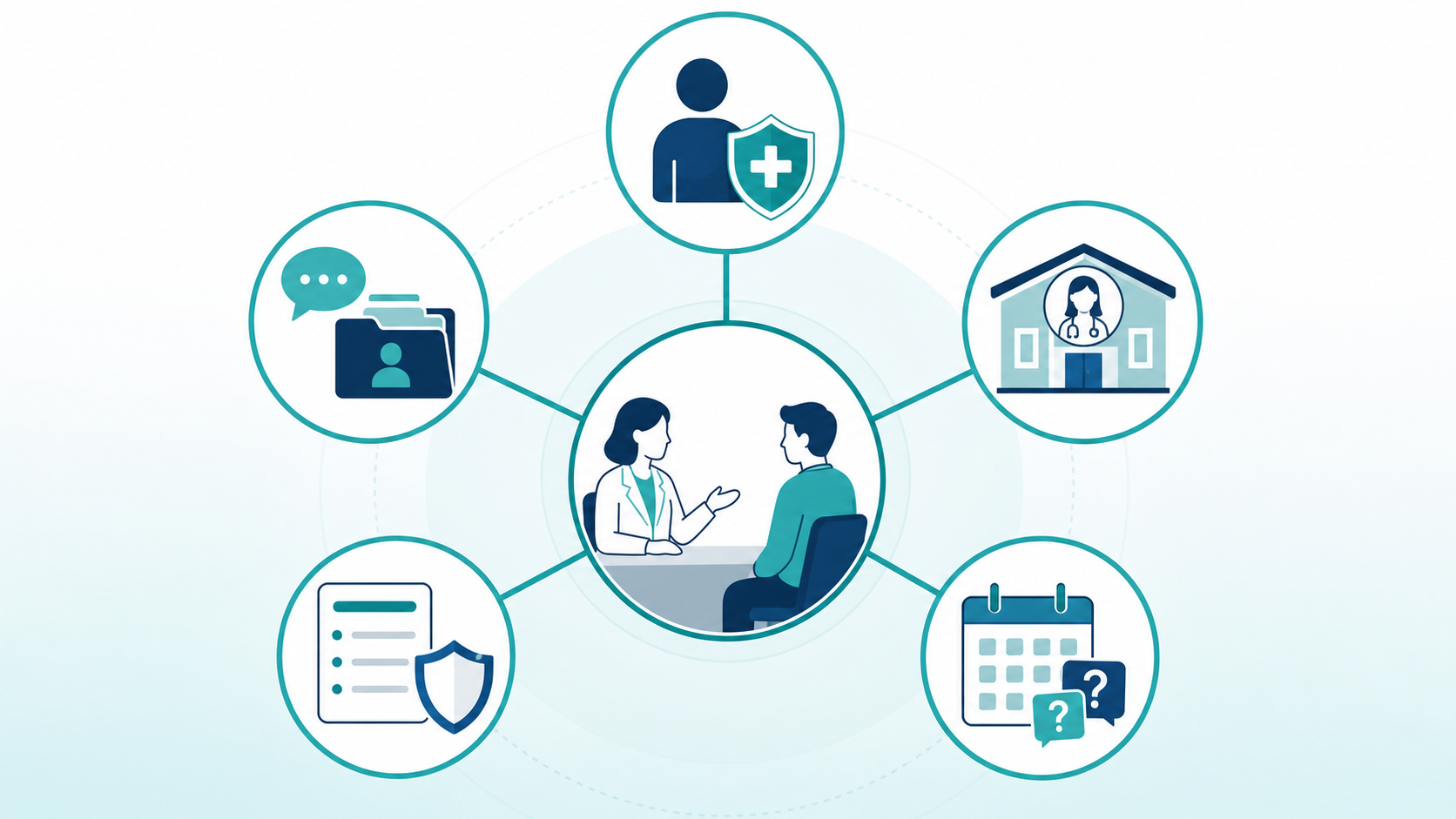
The official indication includes counselling and psychosocial support for a reason. Medication can address part of the clinical picture, while a complete plan may also consider housing, mental health, pain, other substance use, family support, work, transportation, safety and the person’s goals. The exact mix should be individualized by the care team and patient.
Health Canada describes several medicines used in opioid use disorder treatment, including methadone, buprenorphine/naloxone and extended-release buprenorphine. These options differ in how they are taken, how often a person attends, their safety considerations and the circumstances in which a prescriber may consider them. An explainer cannot rank them for an individual because medical history, current opioid exposure, other medicines, pregnancy, liver health, pain needs and treatment stability can change the decision.
| Question | What an article can clarify | What requires a clinician |
|---|---|---|
| What is it used for? | The approved adult indication and complete-plan context. | Whether the indication and option fit the individual. |
| How is it received? | It is professionally administered under the skin in a medical setting. | Readiness, timing, pathway, dose and injection-site decisions. |
| How long is treatment? | The need for continuing treatment is reassessed periodically. | When to continue, change or stop, and how to monitor afterward. |
| What else is needed? | Counselling and psychosocial support are part of the indicated complete plan. | The appropriate supports, referrals and follow-up schedule. |
What a clinician considers before Sublocade treatment
A person should not use an internet checklist to start or rule out treatment. The current monograph states that Sublocade should not be administered to opioid-naïve patients. It also contains detailed warnings, contraindications, interactions and special-population information that a prescriber must apply to the patient’s circumstances.
An assessment may include the pattern and timing of opioid use, withdrawal, previous treatment, current buprenorphine exposure, other prescription and non-prescription medicines, alcohol or sedative use, breathing conditions, liver health, pregnancy or breastfeeding considerations, pain treatment, mental health, allergies and the ability to return for monitoring. This list is not a self-screen or a complete medical assessment.
The current monograph includes more than one clinician-managed induction pathway. It describes a rapid-induction route and an alternate induction-and-stabilization route, as well as transition for people already receiving transmucosal buprenorphine. That means older articles stating that every patient must follow exactly the same fixed seven-day sequence may be incomplete. It does not mean a reader should choose or attempt a pathway. The prescriber determines what is appropriate and monitors the process.
How Sublocade is administered
Sublocade is not a prescription a patient picks up and injects at home. The monograph says it must be administered subcutaneously by a healthcare professional and that it is available through controlled distribution. Health Canada’s public opioid-treatment page describes extended-release buprenorphine injection as being given by a healthcare provider in a hospital, clinic or other medical setting about every four weeks.
The monograph contains precise professional instructions about injection locations, scheduling and monitoring. Those details belong in clinician training and the official document, not in a patient-facing how-to. A patient should never try to remove, manipulate or inject the depot and should not obtain the product outside the controlled healthcare process.
At follow-up, the care team may ask about cravings, withdrawal, opioid and other substance use, side effects, injection-site concerns, medicines, pain care and progress toward treatment goals. The need for continued medication-assisted treatment is reassessed. If treatment is changed or stopped, the monograph describes ongoing monitoring because buprenorphine levels and possible withdrawal considerations can continue for an extended period.
What Sublocade is not used for
Clear limits prevent the indication from being stretched into unsafe assumptions:
- It is not approved as a general treatment for every kind of substance use or every person who has used an opioid.
- It is not an emergency response to a suspected overdose. Call 911 and follow local overdose-response guidance; use naloxone if available and you know how.
- It is not a self-administered injection or an at-home detox method.
- It is not a stand-alone replacement for counselling, psychosocial support and ongoing clinical care.
- It is not proof that a person can safely use other opioids, benzodiazepines, alcohol or sedating medicines. Interactions and respiratory-depression risks require clinical attention.
- It is not a guarantee of abstinence, comfort, employment, relationships or recovery outcomes.
- It is not a one-size-fits-all answer about pregnancy, breastfeeding, liver conditions, acute pain or surgery. Those circumstances need specific medical planning.
Important safety context to discuss
The product monograph has a serious warnings and precautions section. It discusses risks including addiction, abuse and misuse of buprenorphine; respiratory depression; interactions with benzodiazepines and other central nervous system depressants; liver and injection-site concerns; pregnancy-related considerations; and the need to tell healthcare professionals about Sublocade when acute pain treatment is needed. This summary is not exhaustive.
Before an appointment, make a complete list of prescription medicines, non-prescription drugs, vitamins, supplements, alcohol and other substances. Include recent opioid use honestly; accurate information helps a clinician reduce the risk of precipitated withdrawal and other complications. Mention pregnancy, plans to become pregnant or breastfeeding, and tell the team about planned dental work, surgery or acute pain care.
A decision path for your next appointment
- Clarify the purpose. Ask whether the discussion is about opioid use disorder treatment and how the clinician confirmed the diagnosis and treatment goals.
- Review current treatment and opioid exposure. Bring the exact medicines, doses as prescribed, last-use timing and pharmacy information. Do not change them based on this article.
- Discuss the full care plan. Ask what counselling, psychosocial, harm-reduction and follow-up supports will accompany medication.
- Understand alternatives. Ask why the clinician is considering an extended-release injection rather than continuing or choosing another evidence-based option.
- Review safety and logistics. Ask about interactions, injection-site expectations, pain planning, missed visits, pregnancy considerations, monitoring and who to contact between appointments.
- Confirm service availability. If contacting Road To Recovery, ask whether the specific location currently provides Sublocade assessment and administration. A network-level service listing does not prove every location offers it.
- What problem are we treating, and what are the goals?
- What must happen before the first injection, and who monitors that process?
- What other treatment choices are reasonable for me?
- Which medicines or substances create important risks?
- What counselling and psychosocial supports are part of the plan?
- Who should I contact for a missed appointment, side effect or pain emergency?
- How and when will we decide whether the plan is working?
Common mistakes to avoid
- Using an old fixed rule. The December 2025 monograph includes multiple clinician-managed pathways. Do not rely on a generic “everyone waits seven days” statement.
- Treating monthly as an exact self-schedule. The prescriber and clinic manage timing within the approved framework.
- Withholding other medicines or substance use. Complete information is essential for interaction and withdrawal-risk assessment.
- Assuming an injection removes overdose risk. Opioid and sedative combinations can still be dangerous, and emergency planning remains important.
- Stopping follow-up because medication is long-acting. Ongoing assessment, support and safety monitoring remain part of care.
- Assuming one clinic page confirms access everywhere. Confirm the specific location, appointment process and current service availability.
Frequently asked questions
Is Sublocade used for pain?
The Canadian indication discussed here is management of moderate to severe opioid use disorder in adults, not routine pain treatment. People receiving Sublocade should tell clinicians treating acute pain because buprenorphine can affect pain-management decisions.
Is Sublocade the same as naloxone?
No. Sublocade contains extended-release buprenorphine for ongoing opioid use disorder treatment. Naloxone is an emergency medication used to temporarily reverse a suspected opioid overdose. Sublocade does not replace carrying naloxone or calling 911 during an overdose emergency.
Can someone give themselves Sublocade?
No. The Canadian monograph says it is administered subcutaneously by a healthcare professional under controlled distribution and should never be handed to a patient for self-administration.
Does everyone need the same preparation before starting?
No universal patient instruction is safe. The current monograph includes multiple clinician-managed pathways, and a prescriber selects and monitors the appropriate approach based on current treatment, opioid exposure and clinical circumstances.
How often is it given?
Health Canada describes extended-release buprenorphine injection as being administered by a healthcare provider about every four weeks. Exact timing and any exception are clinical decisions governed by the current monograph and treatment plan.
Does Road To Recovery offer Sublocade at every location?
The network’s public site lists Sublocade among its services, but this draft does not verify availability at every location. Contact the clinic network and confirm the specific location, assessment process and current availability.
Discuss the indication and next step with a clinician
Road To Recovery’s public site lists opioid use disorder services across Ontario and provides a dedicated Sublocade information page. You can review its treatment programs and support resources. The network currently lists 647-368-6000 and admin@roadtorecovery.clinic; reconfirm those details and service availability before relying on them.
Official sources reviewed
- Health Canada Drug Product Database — marketed status, route, controlled distribution and current monograph link.
- Canadian Sublocade product monograph dated December 2, 2025 — indication, professional administration, patient selection, warnings, pathways and patient information.
- Health Canada opioid use disorder and treatment — public-health context for evidence-based treatment options.
- Road To Recovery — business contact and network-level service context only.