
What a Suboxone MAT program does and why it matters in Ontario
Suboxone contains buprenorphine with naloxone and is a proven medication-assisted treatment for opioid use disorder. Programs that deliver Suboxone aim to reduce withdrawal and cravings, stabilise daily life, and support longer-term recovery through medical care and counselling. In Ontario, Suboxone is offered in specialised addiction clinics, some primary care offices, and community health centres. For practical guidance on where MAT is available and what to look for in a provider, see SAMHSA’s Decisions in Recovery handbook, which outlines typical settings and recommends choosing providers who specialise in opioid use disorder care Decisions in Recovery: Medications for Opioid Addiction.
If you live in Ontario and want a clinic that offers Suboxone alongside other options, Road To Recovery provides multiple medication-assisted treatment choices and coordinates psychiatry referrals when needed. Road To Recovery uses an online intake portal and supports same-day nurse and physician triage for opioid agonist therapy starts to reduce delays. For clinic-level program details, see the MAT Suboxone program page on the Road To Recovery website MAT Suboxone Program in Ontario.
Seven decision criteria to compare Suboxone MAT programs
Use these seven evidence-informed criteria to compare clinics. Each criterion includes quick checks you can ask a clinic representative.
1. Access and wait time
How fast can you be seen? Clinics that specialise in opioid use disorder often offer same-day or rapid intake. Quick checks: ask whether a nurse triage and physician assessment can be arranged on the same day, and whether an online intake form is available to speed your visit.
2. Medication options offered
Does the clinic offer only Suboxone, or also methadone, Kadian, and injectable buprenorphine (Sublocade or Brixadi)? Access to multiple options makes it easier to switch medications if your needs change. Confirm whether the clinic supports transfers between OAT medications.
3. Dosing flexibility and take-home eligibility
Suboxone is usually prescribed as a daily sublingual film or tablet and allows dose adjustments and take-home prescriptions when clinically safe. Injectable options remove daily dosing responsibility but limit dose fine-tuning. Ask about criteria for take-home doses and how dose changes are handled.
4. Visit frequency and travel burden
How often must you attend the clinic for supervised dosing, injections, or follow-up? If you have work, childcare, or long travel times, prioritise programs that offer take-home doses, flexible scheduling, or long-acting injectable options to reduce travel burden.
5. Integrated mental health and psychiatry linkage
Many people benefit from concurrent mental health care. Ask whether counselling is available on site, and how psychiatry referrals are arranged. Some clinics coordinate virtual psychiatry through regional partners to speed access.
6. Privacy and record handling
Ask how medical records are stored and who can access them. Confirm policies for sharing urine drug test results and prescription monitoring information. Clinics should explain consent and how they protect patient privacy.
7. Cost and coverage considerations
Check which medications and visits are covered by provincial drug plans, private insurance, or patient assistance programs. If cost is a barrier, ask the clinic for alternatives and whether they provide financial navigation.
How Suboxone compares with injectable buprenorphine options
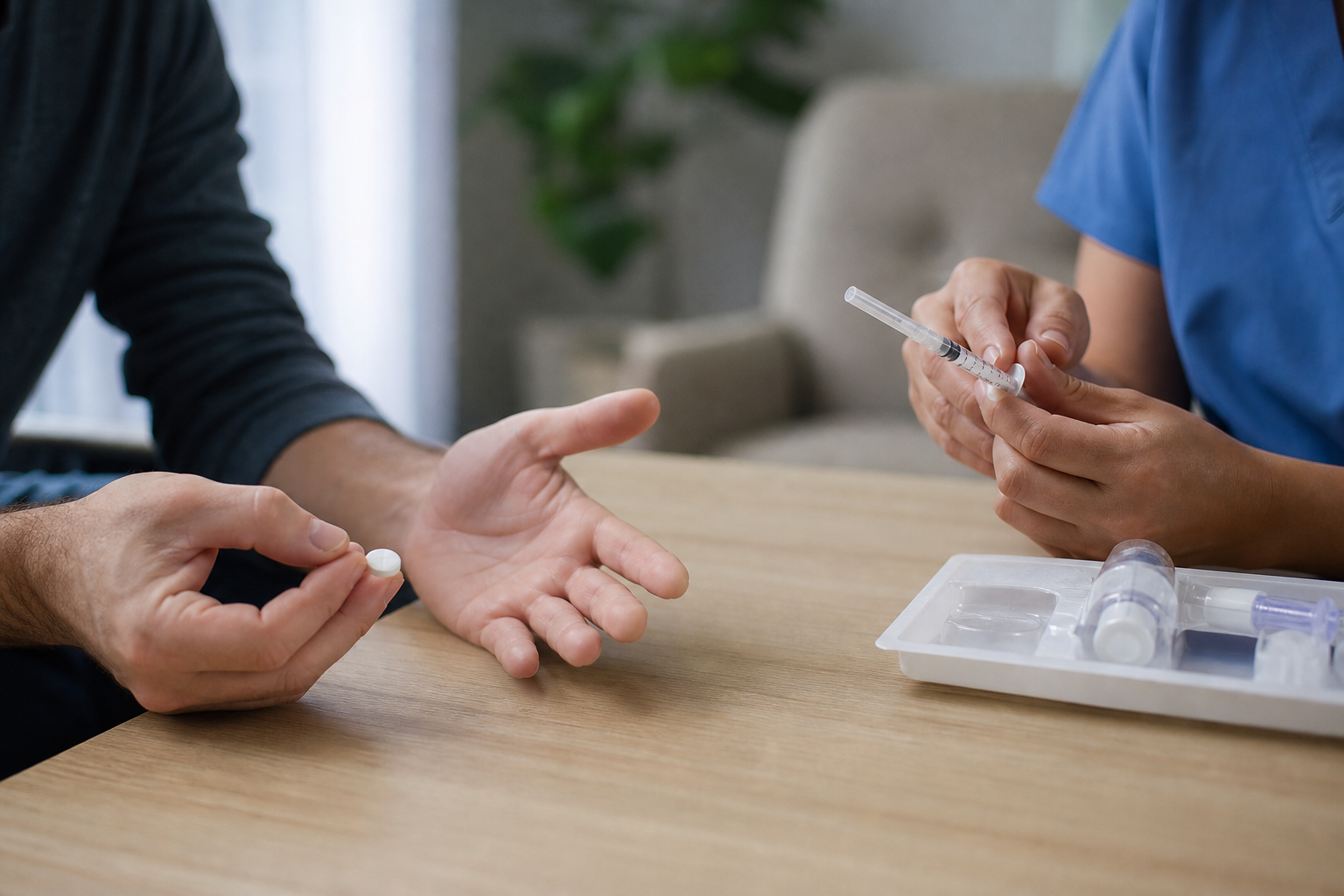
Both Suboxone and injectable buprenorphine use buprenorphine but differ in delivery and trade-offs. Suboxone is a daily sublingual film or tablet that allows dose adjustments and take-home management. Injectable products such as Sublocade and Brixadi are administered as monthly or extended-release injections at the clinic, which reduces daily medication management and the risk of diversion, but reduces immediate dose flexibility. Patients who value dose control and the ability to stop quickly often prefer Suboxone, while those who want fewer clinic visits and less daily management may prefer injectables. For a practical comparison of delivery and lifestyle trade-offs, see a patient-focused overview Suboxone vs Sublocade vs Brixadi.
How to start same-day OAT in Ontario: a step-by-step checklist
Use this checklist to prepare for a same-day Suboxone start and reduce delays.
- Complete any available online intake forms before your visit to save time at reception. Road To Recovery offers an online intake portal for MAT starts.
- Bring government ID and a current medication list, including prescriptions for opioids or other controlled medications.
- Prepare a short medical and substance use history and a list of questions about side effects, take-home dosing, and follow-up care.
- Expect a nurse triage to assess withdrawal and medical history, followed by a physician assessment for eligibility and induction dosing. Clinics offering same-day starts typically manage induction and arrange follow-up in the first visit.
- If you need mental health or psychiatry support, request that referrals be arranged during intake; some clinics can book virtual psychiatry the same day.
Exact questions to ask a Suboxone MAT program before you enrol

Bring this printable list when you call or attend. These questions let you compare programs on safety, logistics, and support.
- Safety and side effects: What are common side effects of Suboxone and how will you monitor them?
- Take-home dosing: What are the criteria for take-home prescriptions and how soon might I qualify?
- Urine testing and privacy: How often are urine or other drug tests required and how are results stored and shared?
- Psychiatry support: Do you provide counselling and how do you arrange psychiatry referrals if needed?
- Medication transfers and travel: Can you transfer my care if I started elsewhere, and how are prescriptions handled during travel?
- Follow-up: How often will I be seen during induction, stabilisation, and maintenance phases?
- Costs: Which medications and visits are covered by provincial or private insurance, and do you offer financial navigation?
Real objections patients raise and how clinics address them
Common concerns and typical clinic responses help you know what to expect.
- Privacy and stigma: Clinics should describe their confidentiality practices and who has access to records. Ask for written privacy policies if you are concerned.
- Fear of forced tapering: Good programs use collaborative treatment plans and discuss tapering only when it is clinically appropriate and you agree.
- Parenting and child welfare: If you have child protection concerns, ask whether the clinic provides navigation support. Some clinics offer targeted supports to help families manage these issues.
- Criminal record concerns: Ask how prescriptions and clinical records are documented and whether any disclosures happen without consent.
Final decision checklist and next steps
Use this short checklist in the waiting room to confirm a good fit and start treatment quickly.
- Does the clinic offer Suboxone and the other medication options you want? If yes, proceed.
- Can the clinic arrange same-day intake or a rapid first visit? If yes, complete the online intake now if available.
- Did you get clear answers about privacy, take-home eligibility, and psychiatry referrals? If not, request written policies or another appointment to clarify.
To begin a streamlined Suboxone start in Ontario or to compare local Suboxone MAT options, use the clinic intake portal on the program page. For details and to begin the intake process with Road To Recovery, visit the MAT Suboxone program page on the Road To Recovery website: MAT Suboxone Program in Ontario.
Frequently asked questions
What is the difference between Suboxone and injectable buprenorphine like Sublocade?
Suboxone is a daily sublingual formulation that allows dose adjustments and take-home use when clinically appropriate. Injectable buprenorphine, such as Sublocade or Brixadi, is administered as a clinic injection on a monthly or extended schedule and reduces the need for daily medication management. Both use buprenorphine but differ in delivery, visit frequency, and flexibility. See a patient-focused comparison for more on trade-offs Suboxone vs Sublocade vs Brixadi.
Will my Suboxone treatment be confidential and appear on my regular medical records?
Clinics keep medical records for continuity of care and may share information with other providers with your consent. Ask the clinic about their privacy policy, who has access to records, and how they handle urine testing and prescription monitoring before you enrol.
How quickly can I start Suboxone treatment and what happens at a same-day intake?
Some clinics offer same-day intake where a nurse triages you and a physician assesses you for OAT during one visit. You may complete an online intake, bring ID and medication history, and have withdrawal assessed before induction. Clinics that provide same-day starts typically arrange follow-up and support at the first visit.
Can I switch from another OAT medication to Suboxone at a clinic?
Yes. Many clinics manage transfers between OAT medications with a supervised transition plan to reduce withdrawal and ensure safety. Ask the clinic about their transfer protocol and whether they can provide bridging prescriptions when needed.
What should I do if I want psychiatry support while on a Suboxone program?
State your need for mental health or psychiatry support during intake. Clinics that coordinate referrals can arrange local psychiatry or virtual appointments through partners to support integrated care.
If you are ready to start or want help comparing Suboxone MAT options in Ontario, visit Road To Recovery to learn more and begin the intake process: Road To Recovery.
Recent Post
-
 October 23, 2026
Cocaine Outpatient Treatment Outcomes: What Progress Really Looks...
-
 October 20, 2026
Family Resources for Addiction Recovery in Hamilton: Practical...
-
 October 19, 2026
How to Choose an Opioid Agonist Therapy Clinic...
-
 October 18, 2026
Kadian for Opioid Use Disorder: How Treatment Works...

You are Valued
Road to Recovery is an outpatient opioid detoxification center, with locations across Ontario.
- Confidential care
- Same-day support
- Personalized treatment