
Looking for alcohol addiction treatment programs Ontario residents can start without long waits? You’re in the right place. This complete, practical guide explains how outpatient alcohol care works across Ontario—and how Road To Recovery’s confidential, judgment-free clinics help you or a loved one take the first step today with clear options, coordinated mental health support, and fast access to care.
Quick Answer
Ontario offers multiple alcohol addiction treatment programs, including outpatient options you can begin quickly. Road To Recovery’s Ontario clinic network provides confidential assessments, therapy pathways, and coordinated psychiatry referrals so you can start recovery now—without judgment or long delays.
Quick Summary
- Understand what alcohol use disorder (AUD) is and how evidence-based treatment works in Ontario.
- Compare outpatient vs. inpatient programs and when each path makes sense.
- See the step-by-step process to start care at Road To Recovery—fast and confidential.
- Explore therapy options, medications, relapse-prevention tools, and family supports.
- Use Ontario-focused tips, checklists, and resources to take action today.
Table of Contents
- What Is Alcohol Addiction Treatment?
- Why Programs in Ontario Matter
- How Treatment Works: Step-by-Step
- Types of Programs and Approaches (Ontario)
- Best Practices That Improve Outcomes
- Tools, Resources, and Ontario Supports
- Real-World Scenarios in Ontario
- FAQs
- Key Takeaways and Next Steps
What Is Alcohol Addiction Treatment?
Alcohol addiction treatment brings structure, medical guidance, and behavioral tools to help you reduce harm, restore health, and sustain change. Programs range from outpatient counseling you attend a few hours per week to residential care when safety and 24/7 support are necessary.
- Clinical assessment
- Confidential screening for alcohol use disorder (AUD), co-occurring mental health needs, and safety risks.
- Personalized goals: abstinence, reduction, or stabilization—based on your health and preferences.
- Detox planning and symptom support
- Medically guided tapering or support if alcohol withdrawal risks are present.
- Coordination with higher-acuity services if inpatient detox is the safer path.
- Therapy and skills building
- Motivational Interviewing, CBT, and relapse-prevention coaching to change patterns.
- Group and family options to strengthen your support network.
- Medication options
- Where clinically appropriate, medications may help reduce cravings and support stability.
- Psychiatry referrals arranged locally or virtually (e.g., through CAMH and OTN partners) when mental health input is needed.
- Aftercare and monitoring
- Relapse-prevention planning, trigger management, and ongoing check-ins.
- Flexible follow-ups that fit work, school, or family schedules.
Here’s the thing: most people don’t need to figure this out alone. Road To Recovery’s Ontario network offers confidential assessments, therapy pathways, and coordinated psychiatry referrals so you can move forward with clarity.
Why Programs in Ontario Matter
Timely access to care saves lives and stabilizes families. Ontario’s broad geography and busy urban centers can make it hard to find the right fit. That’s why a multi-location outpatient network with reduced wait times changes the game.
- Fast starts reduce risk
- When motivation is high, delays increase drop-off. Quick access helps you act while you’re ready.
- Road To Recovery emphasizes reduced wait times with streamlined intake so you begin sooner.
- Judgment-free, confidential care
- Stigma keeps many from reaching out. A respectful, private setting removes barriers.
- Every clinic in the network centers care on dignity and personalized planning.
- Integrated mental health support
- Depression, anxiety, or trauma can fuel alcohol use. Coordinated psychiatry referrals (local or virtual) add safety and momentum.
- Partners like CAMH and OTN expand access for communities across Ontario.
- Province-wide accessibility
- Locations across Toronto, Barrie, Brampton, Brantford, Hamilton, Newmarket, Orillia, and Sault Ste. Marie support consistency even if you commute or relocate.
- Consistency is a major predictor of recovery success.
Bottom line: alcohol addiction treatment programs in Ontario work best when they’re easy to start, respectful, and tailored to real life. That’s the model Road To Recovery follows across its clinics.
How Treatment Works: Step-by-Step
Every person’s path is unique, but a proven flow removes guesswork. Use this roadmap to understand how to begin and what to expect.

1) Confidential intake (what to share and why it matters)
- What happens: Brief, private intake to understand goals, safety, medical history, and current alcohol pattern.
- Why it matters: Accurate information guides a safer, more effective plan from day one.
- Action: Bring a list of medications, recent use patterns, and any prior treatments. Honesty helps us help you.
2) Clinical assessment and care plan
- What happens: Screening for AUD severity, co-occurring conditions, and withdrawal risks; a tailored plan is created.
- Why it matters: The right level of care (outpatient vs. inpatient) improves safety and outcomes.
- Action: Ask which short-term goals you can hit this week—small wins add up fast.
3) Stabilization and detox support (if needed)
- What happens: Symptom monitoring, taper planning, and coordination if inpatient detox is the safer choice.
- Why it matters: Alcohol withdrawal can be risky; medical guidance reduces complications.
- Action: Share any history of seizures, severe withdrawal symptoms, or other medical issues.
4) Therapy pathway selection
- What happens: Match with evidence-based therapies like Motivational Interviewing and CBT; group or family options considered.
- Why it matters: Skills training helps you navigate triggers, stress, and social situations.
- Action: Choose formats that fit your schedule. Consistency beats intensity.
5) Mental health and psychiatry referrals
- What happens: Coordinated referrals for psychiatric evaluation when anxiety, depression, trauma, or insomnia complicate recovery.
- Why it matters: Treating both AUD and mental health increases stability and reduces relapse risk.
- Action: Mention mood changes, sleep issues, and panic symptoms—these details shape better care.
6) Relapse prevention and aftercare
- What happens: Trigger mapping, coping strategies, accountability check-ins, and ongoing support.
- Why it matters: The weeks after initial change are high-risk; planning lowers risk and builds confidence.
- Action: Create a written plan for weekends, holidays, and travel—common relapse windows.
Types of Programs and Approaches (Ontario)
Ontario offers a spectrum of alcohol addiction care. The right fit depends on safety, stability, and daily demands like work, family, and school.
| Program Type | Best For | What to Expect | Considerations |
|---|---|---|---|
| Outpatient (Road To Recovery) | Mild to moderate AUD, stable housing, able to attend visits. | Confidential assessment, therapy options, coordinated psychiatry referrals, flexible scheduling. | Requires self-management between visits; great for work or school routines. |
| Intensive Outpatient/Day Programs | Moderate to severe AUD needing more structure without overnight stay. | Multiple therapy sessions weekly, skills groups, relapse-prevention planning. | Time commitment is higher; may require schedule adjustments. |
| Inpatient/Residential | Severe AUD, high medical or safety risk, unstable environment. | 24/7 structure, medical supervision, comprehensive therapy on-site. | Requires leaving home/work temporarily; step down to outpatient after. |
| Community & Peer Supports | Anyone seeking added accountability and sober social connection. | Peer-led meetings, recovery groups, family education options. | Complements—not replaces—clinical treatment when AUD is moderate to severe. |
Therapies we commonly coordinate
- Motivational Interviewing (MI): Enhances readiness to change; ideal for early engagement.
- Cognitive Behavioral Therapy (CBT): Builds coping skills, restructures thought patterns, and reduces relapse risk.
- Relapse-Prevention Coaching: Plans for triggers like holidays, work events, and travel.
- Family-Involved Sessions: Aligns boundaries and support strategies at home.
When inpatient is the safer path
- History of severe withdrawal, seizures, or delirium tremens.
- Unstable housing or unsafe environment.
- Complex medical comorbidities requiring round-the-clock monitoring.
- In these cases, we coordinate a referral and then plan outpatient follow-up.
Best Practices That Improve Outcomes
Recovery is a set of repeatable habits. Here are the practices we see move the needle across Ontario—whether you live near Yonge & Dundas or in Sault Ste. Marie.
- Make the first appointment now
- Momentum fades fast. Booking the first visit starts a positive chain reaction.
- We offer reduced wait times so you can start while you’re ready.
- Build a weekly rhythm
- Choose consistent days/times for sessions; predictability lowers stress and improves attendance.
- Use phone reminders and put sessions on your family calendar.
- Pair therapy with mental health care when needed
- If mood, anxiety, or sleep issues are present, psychiatry input often accelerates progress.
- Road To Recovery coordinates local and virtual referrals through partners like CAMH and OTN.
- Write your relapse-prevention plan
- Cover high-risk windows: weekends, holidays, sporting events, business travel.
- List three people you’ll text or call when urges spike.
- Engage family (with your consent)
- Shared expectations reduce conflict; loved ones can reinforce boundaries and wins.
- We also support families with practical resources and guidance.
- Track small wins
- Seven days, then two weeks, then a month—celebrate progress to lock in motivation.
- Write it down; data beats memory during tough moments.
Soft CTA: Ready to talk confidentially? Reach out to Road To Recovery’s Ontario clinics for a judgment-free assessment and a plan that fits your routine.
Tools, Resources, and Ontario Supports
Use these checklists and prompts to organize the first 30 days of change. Copy, adapt, and share with your support network.
First-week checklist
- Book your initial assessment and add it to your calendar.
- List medications, allergies, and past treatments.
- Identify two safe spaces to ride out cravings (gym, library, friend’s place).
- Clear your home of alcohol; ask a trusted person to help if needed.
- Plan evening routines that reduce idle time: meal prep, walks, hobbies.
Relapse-prevention prompts
- What are your three biggest triggers? What will you do in the first five minutes when they hit?
- Who are your top three support contacts? Save them as phone favorites.
- What’s your plan for holidays and long weekends? Write it down now.
- How will you handle work events involving alcohol? Draft scripts you can use.
Coordinated psychiatry support
- When symptoms of depression, anxiety, PTSD, or insomnia surface, coordinated psychiatry referrals add stability.
- Road To Recovery arranges local or virtual consults through established Ontario partners (e.g., CAMH, OTN).
For perspective on medication-assisted pathways in addiction care, explore our overview of medication-assisted treatment benefits and our recovery options guide. While these articles focus on opioids, the structure and principles often apply to alcohol recovery planning too.
Real-World Scenarios in Ontario
Here are practical, anonymized examples that mirror what many people experience across our Ontario clinics.
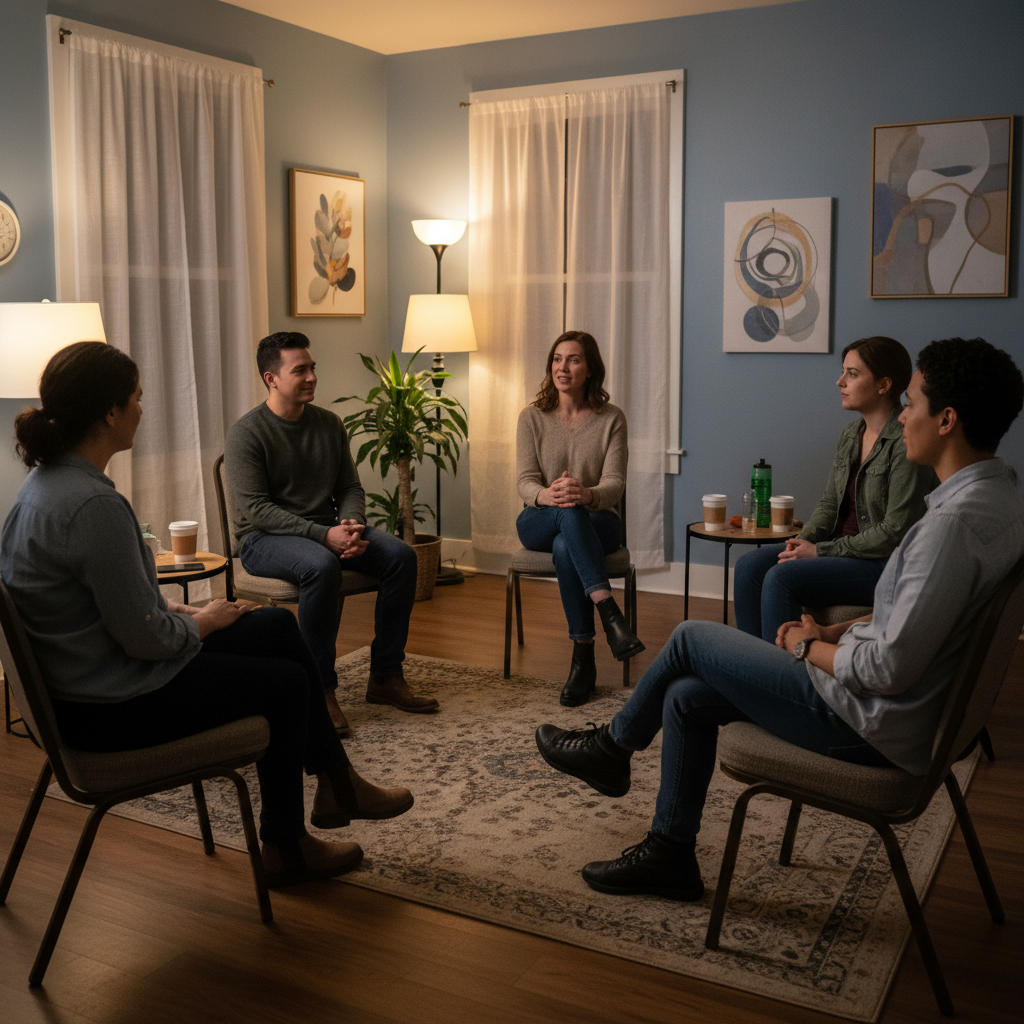
Scenario A: Downtown Toronto (Yonge & Dundas)
- Situation: Service worker with variable shifts, binge drinking on weekends.
- Approach: Outpatient therapy with relapse-prevention coaching, evening sessions, and scripts for social events.
- Outcome: Reduced binge frequency and better sleep; written plan for holidays and festivals.
Scenario B: Barrie (Central)
- Situation: Parent balancing childcare and work; drinks to manage stress.
- Approach: Weekly CBT sessions; coordinated parenting support strategies; family-involved visit (with consent).
- Outcome: Healthier home routines and measurable reduction in drinking days.
Scenario C: Hamilton
- Situation: Tradesperson experiencing anxiety and insomnia fueling alcohol use.
- Approach: Therapy plus psychiatry referral via virtual appointment; sleep hygiene plan.
- Outcome: Stabilized mood, fewer cravings, improved job attendance.
Scenario D: Sault Ste. Marie
- Situation: Limited local resources and long commutes.
- Approach: Outpatient sessions aligned with work days; virtual mental health support coordinated through partners.
- Outcome: Consistent attendance and sustained progress over winter months.
Local Tips
- Tip 1: If you’re near Toronto’s Yonge & Dundas or St. James Town, plan sessions outside rush-hour subway times to reduce stress getting to appointments.
- Tip 2: In winter months, Barrie and Sault Ste. Marie roads can be challenging—book earlier daylight appointments or ask about virtual options for mental health consults.
- Tip 3: Bring a written list of triggers to your first visit; we’ll use it to shape your personalized plan and coordinate psychiatry referrals if needed.
IMPORTANT: These tips are specific to Road To Recovery’s Ontario clinic network and the outpatient services we coordinate.
Frequently Asked Questions
How do I know if outpatient care is enough?
If you have stable housing, can attend appointments, and don’t have severe withdrawal risks, outpatient care is often appropriate. In your assessment, we screen for safety issues and recommend inpatient care when 24/7 support is the safer choice. Many people start outpatient, then step up or down as needs change.
Can Road To Recovery help with medications for alcohol recovery?
Yes—where clinically appropriate. We coordinate care plans that may include medications to reduce cravings alongside therapy. When mental health input is needed, we arrange psychiatry referrals locally or virtually (e.g., through partners like CAMH and OTN) to ensure a comprehensive approach.
What if I’m not ready to quit—can I still get help?
Absolutely. We use Motivational Interviewing to meet you where you are. Some patients start with reduction goals and evolve to abstinence over time. The key is to start the conversation, set practical next steps, and build momentum.
Do you support families and partners?
Yes. With your consent, we offer family-involved sessions, resources, and guidance to reduce conflict and align support at home. Clear boundaries and shared language improve outcomes and lower relapse risk.
How fast can I get started?
Road To Recovery emphasizes reduced wait times. Contact us to schedule a confidential assessment, and we’ll align the first steps around your schedule. Early momentum is one of the strongest predictors of long-term success.
Key Takeaways and Next Steps
- Ontario has options: From outpatient to inpatient, there’s a safe path for every situation.
- Outpatient works: For many, therapy, coordinated psychiatry support, and structured follow-ups are enough to regain stability.
- Act fast: Reduced wait times help you start while motivation is high.
- Plan for triggers: Write and rehearse your relapse-prevention plan before the weekend.
Ready to get started? Explore our evidence-based approach in this MAT overview and learn how different paths compare in our treatment comparison guide. Then contact Road To Recovery to schedule a confidential assessment at a clinic location that fits your routine.



You are Valued
Road to Recovery is an outpatient opioid detoxification center, with locations across Ontario.
- Confidential care
- Same-day support
- Personalized treatment