
Mental health and addictions care refers to the range of clinical and community services that assess, treat, reduce harm, and support recovery for people experiencing mental health concerns and substance use problems. Treating these needs together is important because mental health and substance use often affect each other, and coordinated care improves safety, access, and long-term support. For an overview of provincial priorities and system planning, see Ontario’s roadmap to wellness and practical guidance on how services are organised across the province. For related first-party details, review Community Care: Get Help Fast and Stay on Track in.
What mental health and addictions care means
At its simplest, mental health and addictions care combines two linked aims: managing symptoms of mental illness and addressing problematic substance use. That includes short-term crisis interventions, ongoing outpatient treatment, medication when appropriate, counselling, harm reduction, and family or community supports. Ontario’s health pages describe how mental health and addictions services are part of the broader provincial health system and outline priorities to make that care more available and better coordinated for residents.
Which services are included under mental health and addictions care
Services vary by setting, but the following categories capture what people commonly need and can expect when seeking help:
Clinical assessments and treatment
- Initial assessment by a nurse, physician, or allied clinician to evaluate urgent risks, diagnosis, and immediate needs.
- Medication management for mental health conditions and for opioid use disorder, including evidence-based options such as methadone, buprenorphine-containing Suboxone, long-acting injectable options like Sublocade, and extended-release formulations such as Kadian when clinically appropriate; these are common examples of medication-assisted treatment offered in outpatient programs.
- Psychiatry assessment and referral when specialised psychiatric input is required.
Counselling, therapy and psychosocial supports
- Individual and group counselling, cognitive behavioural therapy and other structured therapies delivered in-person or virtually.
- Case management, peer support, housing and vocational support coordinated with community partners.
Harm reduction and safer supply
- Practical measures to reduce risk, such as naloxone training, safer supply approaches where available, and information about supervised consumption and overdose prevention.
Family, youth and community resources
- Information and supports for family members and caregiver guidance, plus youth-specific programs and transitions to adult services.
Ontario provides free and confidential information and listings of local supports to help people find the right service for their needs; see the provincial directory for mental health and addictions supports for local program details.
Community and crisis supports available in Ontario

If someone is in immediate danger, or there is a risk of self-harm, overdose, or violence, emergency services should be contacted right away. For non-emergency but urgent concerns, Ontario provides a central helpline and community supports including guided self-help programs such as BounceBack for people aged 15 and older. For an authoritative summary of these resources and contact options, review Ontario’s find mental health support page, which includes helpline information and links to local services.
When a person needs acute inpatient psychiatric care, a physician may refer them to a designated psychiatric facility or hospital. In crisis situations, police or paramedics may take someone to hospital for assessment; the province explains how hospitals and designated facilities are used when inpatient care is required in the designated psychiatric facilities guidance.
How care pathways work in Ontario: crisis, outpatient and inpatient routes
Understanding the common pathways helps you choose the right first step:
- Emergency route: Call 9-1-1 or go to the nearest emergency department if there is an immediate risk to life, a severe overdose, or an acute psychiatric emergency.
- Crisis and urgent supports: Use provincial helplines, crisis text lines, or local walk-in crisis centres for urgent but non-life-threatening situations. These services can de-escalate risk, advise next steps, and direct you to local outpatient or inpatient options; see Ontario’s resource page for how to reach these services.
- Outpatient care: For ongoing treatment, outpatient clinics and community agencies provide assessment, medication-assisted treatment for opioid use disorder, counselling, and harm reduction. Outpatient care is usually appropriate when someone is medically stable but needs structured support to manage symptoms or substance use.
- Inpatient referral: When symptoms require intensive observation, medical stabilisation, or a structured therapeutic environment, a physician can arrange transfer to a designated psychiatric facility or hospital for inpatient care, as described on the province’s designated facilities page.
How Road To Recovery fits these services
Road To Recovery operates outpatient addiction treatment clinics across Ontario that focus on medication-assisted treatment and integrated support. The clinics offer several medication options used in opioid agonist therapy and provide outpatient programs for opioid addiction, alcohol and cocaine addiction, gambling, smoking cessation, and broader mental health and addictions programs. The clinic network coordinates psychiatry referrals locally or virtually through partners, supporting patients who need specialist input; these service details are described on the clinic website.
To reduce delays when starting opioid agonist therapy, Road To Recovery’s intake flow for new OAT patients is designed so a nurse triages the patient and a physician assesses them on the same day they begin treatment. Intake is streamlined through a secure online portal to help people start care quickly, and select clinics offer medical walk-in services to improve access. For an overview of services and how intake works, see the clinic’s service information at Road To Recovery.
What to expect at intake and the first appointment

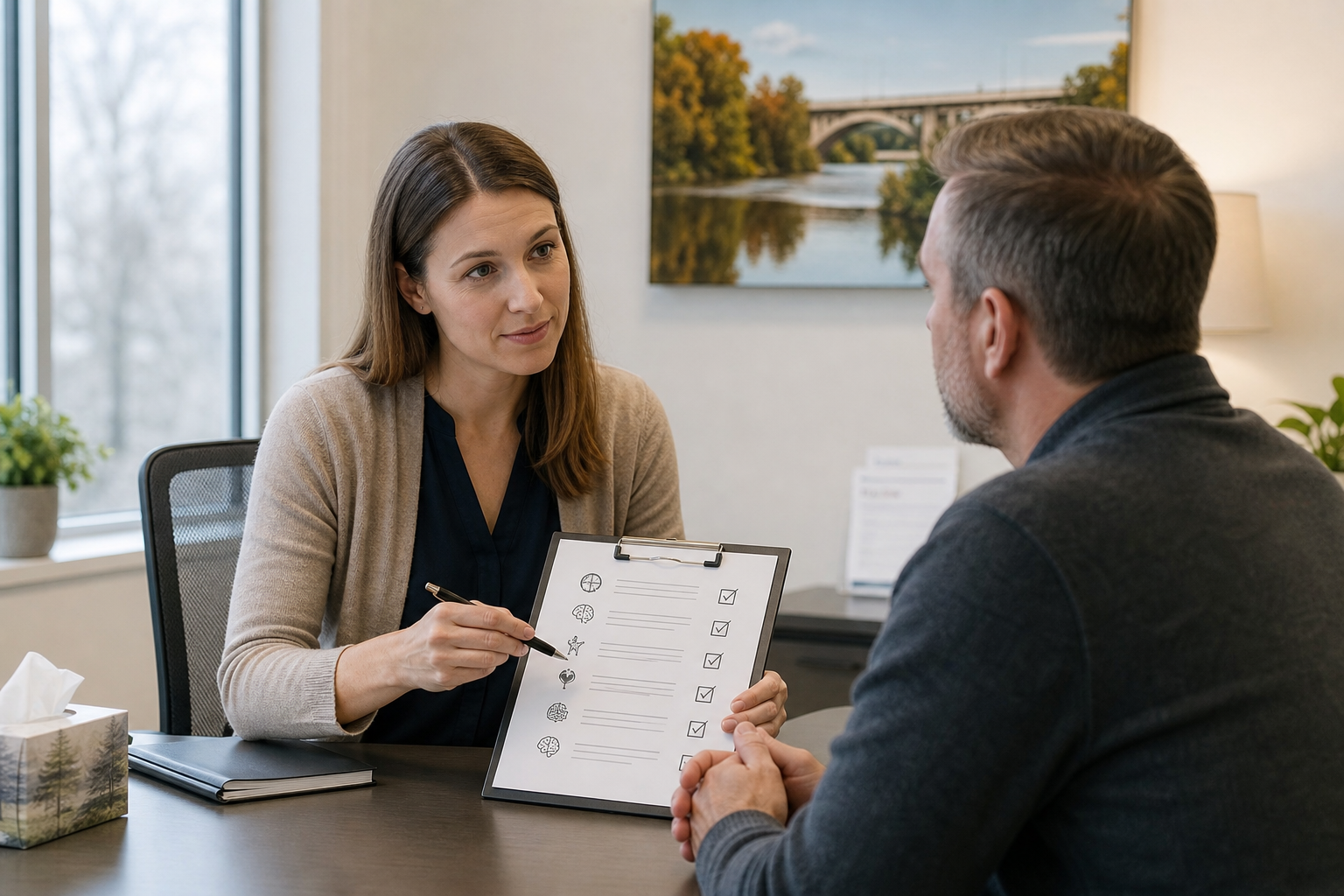
At a typical outpatient intake for addiction or combined mental health and addiction needs, expect these practical steps:
- Initial screening and triage by a nurse to identify urgent medical or safety needs.
- A physician assessment on the same day for new OAT intakes when possible, to review medical history, current substance use, medications, and treatment options.
- Discussion of medication-assisted treatment options if appropriate, and a plan for follow-up visits, counselling or psychiatry referral as needed.
- Information about confidentiality and how personal health information is handled; outpatient clinics typically explain privacy during intake.
- Practical items to bring: photo ID, any current medication lists, and contact information for a trusted support person if you choose to include them.
Road To Recovery uses a secure intake portal to collect information before the first visit and to make same-day assessments more efficient; details are provided on the clinic website.
Common concerns and decision criteria
Here are common concerns patients and families raise, and clear questions to help choose a pathway:
- Confidentiality: Ask how your clinic protects privacy and whether information will be shared with family or other agencies. Clinics should explain consent and information-sharing policies during intake.
- Stigma and judgement: Look for providers who describe care as confidential and non-judgemental and who offer personalised plans.
- Effectiveness of medication-assisted treatment: MAT, including methadone and buprenorphine formulations, is an evidence-based option for opioid use disorder and is frequently offered in outpatient programs; discuss expected benefits and potential side effects with a clinician.
- When to choose emergency care: Use emergency services for life-threatening situations, severe overdose, or immediate risk of harm; for other concerns, crisis lines and outpatient clinics can often provide faster targeted support.
- Access and wait times: If timeliness is important, ask whether the provider offers same-day triage or walk-in services and whether psychiatry referral options are available, including virtual referrals where partnered services exist.
Ontario’s roadmap and the province’s resource pages describe ongoing investments to expand access and integrated models of care across the system, which can help when comparing options.
Practical next steps and trusted links
If you or a loved one needs help right now:
- For immediate danger or severe overdose, call 9-1-1 or go to the nearest emergency department.
- For urgent but non-emergency support, consult Ontario’s central mental health and addictions resource page to find helplines, crisis services, and the BounceBack guided self-help program for people 15 and older.
- To begin outpatient treatment for substance use or combined mental health and addiction needs, start a secure intake with an outpatient clinic such as Road To Recovery to access same-day triage and physician assessment for OAT where appropriate.
- Ask your primary care provider for a referral if you think you need specialised psychiatry or inpatient evaluation; physicians can refer to designated psychiatric facilities when inpatient care is clinically indicated, as outlined by the province.
Trusted links:
- Ontario: Find mental health support — provincial helplines, BounceBack and local service directories
- Ontario: Designated psychiatric facilities and hospitals — how inpatient referrals work in crisis and non-crisis situations
- Roadmap to wellness — provincial plans to expand access to mental health and addictions care
- Road To Recovery — outpatient intake, medication-assisted treatment options and psychiatry referrals
Frequently asked questions
What does ‘mental health and addictions care’ include in Ontario?
It includes crisis intervention, outpatient assessments, counselling, medication-assisted treatment for substance use, harm reduction services, family supports and referrals to inpatient or psychiatric care when needed. Ontario’s provincial resource pages list local services and programs.
When should I go to the hospital or call 9-1-1 for a mental health or addiction crisis?
Call 9-1-1 or go to emergency if there is immediate risk to life, a severe overdose, or an imminent risk of harm. For urgent but non-life-threatening crises, provincial crisis lines and local walk-in centres can provide rapid support and guidance; see Ontario’s resource page for contact details.
How does same-day intake for opioid addiction treatment work at Road To Recovery?
Road To Recovery designs new OAT intakes so a nurse completes initial triage and a physician assesses the patient on the same day they begin treatment, helping to reduce delays. Intake is initiated through a secure online portal and documented on the clinic’s site.
Is care confidential and will family members be notified?
Care at outpatient clinics is subject to privacy laws and clinic policies. Clinics should explain confidentiality, consent and any circumstances in which information must be shared. Discuss your privacy concerns at intake so the team can clarify how information is handled.
What are medication-assisted treatments and will Road To Recovery prescribe them?
Medication-assisted treatments (MAT) combine approved medications with counselling and support to treat opioid use disorder. Road To Recovery offers several MAT options such as methadone, Suboxone, Sublocade and Kadian as part of outpatient care; consult with a clinician for an individual assessment and treatment plan.
If you are ready to start an outpatient intake or want to learn more about the services described here, contact Road To Recovery to begin the secure intake process and explore same-day triage and physician assessment options.



You are Valued
Road to Recovery is an outpatient opioid detoxification center, with locations across Ontario.
- Confidential care
- Same-day support
- Personalized treatment