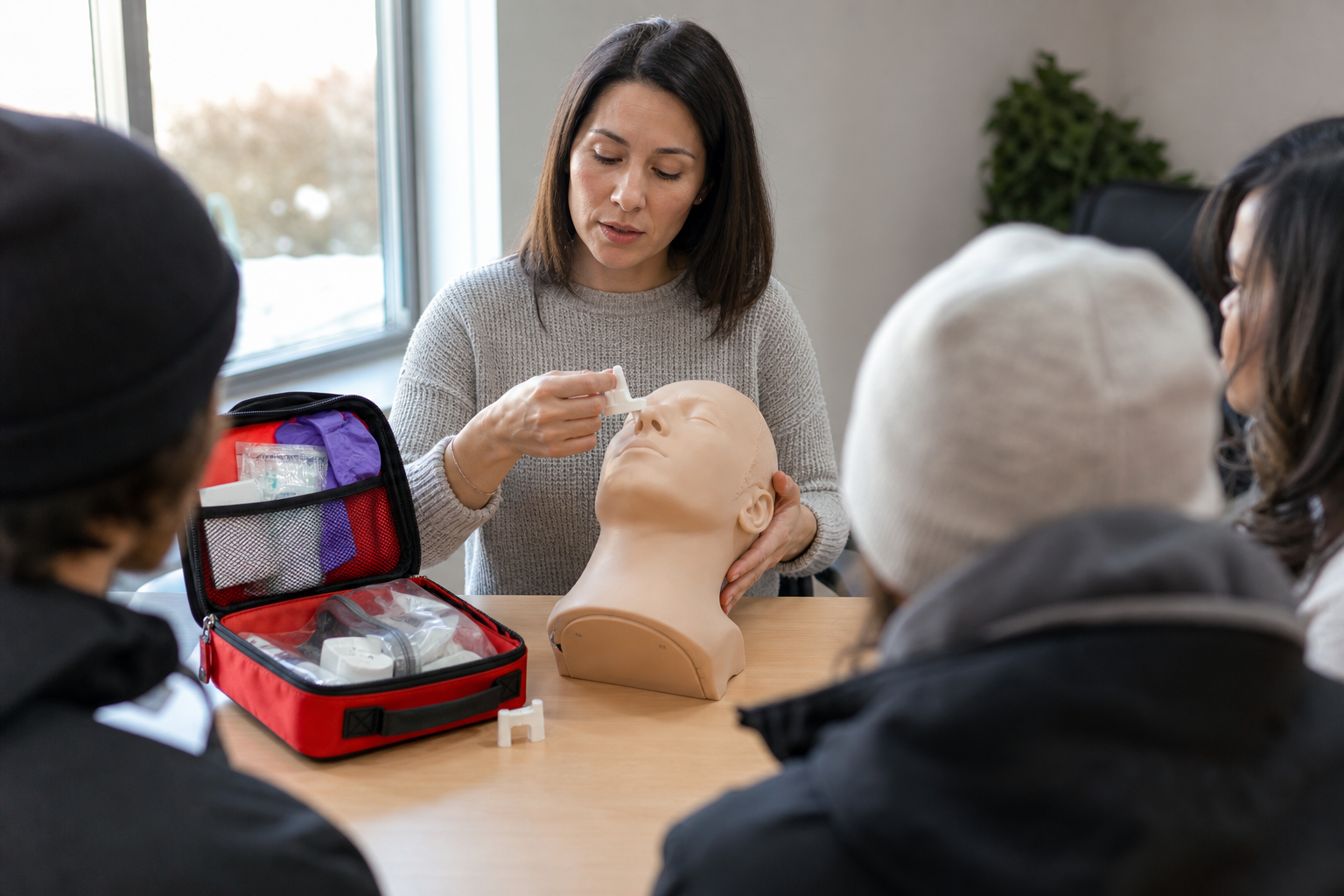
If you are looking for naloxone training in Ontario, start with participating pharmacies, community organizations, take-home naloxone programs, or a workplace program if you need training for your job. The right option depends on who needs the training and where the naloxone kit will be kept.
Good training should prepare you to recognize a suspected opioid overdose, administer naloxone, understand relevant safety considerations, and continue supporting the person while emergency help is obtained. It should also explain how to access and replace a kit. Ontario’s official resources can help you find participating locations and understand workplace responsibilities.
Quick summary

- Use Ontario’s official locator to find nearby pharmacies and community organizations offering naloxone kits and training.
- Confirm that the session covers overdose recognition, naloxone administration, safety, and what to do while waiting for emergency help.
- Choose community or take-home training for personal and household preparation, and workplace training when the kit is maintained at work.
- Ask how to obtain, store, and replace a used or expired kit.
- Naloxone training does not replace emergency medical care or longer-term addiction treatment.
Where to find naloxone training in Ontario
Ontario residents can begin with the province’s official naloxone kit and training locator. It identifies participating pharmacies and community organizations where people can obtain naloxone kits and receive instruction on recognizing an opioid overdose and using the kit.
Take-home naloxone programs are another important route. Ontario’s program information explains that participating organizations and staff train eligible individuals to recognize and respond to an opioid overdose and administer naloxone. This may suit people who use opioids, family members, caregivers, and others who could be present during an emergency. Confirm eligibility and availability with the provider.
If the kit is intended for a workplace, ask whether the provider offers training designed for workplace use. Workplace training needs to address not only how to administer naloxone, but also the hazards and responsibilities associated with keeping and using a kit in that setting.
Community, take-home, and workplace training compared

These options overlap in their core safety lesson, but they are not interchangeable in every situation. Use the setting, the people being trained, and the location of the kit to decide where to start.
| Training option | Best suited to | What to confirm |
|---|---|---|
| Community or pharmacy training | Individuals, families, caregivers, and community members | Whether the location provides both a kit and instruction, and what the session covers |
| Take-home naloxone program | Eligible people who want a kit available at home or in their community | Eligibility, kit availability, administration practice, and replacement instructions |
| Workplace training | Employers and workers responsible for a workplace naloxone kit | Kit location, designated workers, relevant hazards, emergency procedures, and workplace documentation |
Ontario’s workplace guidance says training must cover recognizing an opioid overdose, administering naloxone, and becoming familiar with hazards related to administration. Applicable workplaces also have responsibilities around identifying trained workers near the kit. Review the Ontario workplace naloxone guidance before arranging training for an employer or worksite.
Workplace training is therefore more than a general awareness talk. It should help the employer establish a usable response plan, while community training may focus more directly on personal or household readiness.
What effective naloxone training should teach
There is no need to choose a course based only on its title. Instead, ask whether the content gives you the practical knowledge to act safely under pressure.
Recognizing a suspected opioid overdose
Training should explain signs that may indicate an opioid overdose and distinguish an emergency from ordinary sleep, intoxication, or another medical condition. The goal is not to diagnose the person. It is to recognize when urgent action is warranted and avoid waiting for certainty.
Administering naloxone
You should receive clear instructions on the form of naloxone provided, how to administer it, and what precautions apply. Ask whether the session includes a demonstration or an opportunity to practise with a training device. You can also review this explanation of step-by-step naloxone use, but follow the instructions provided with your kit and during formal training.
Responding after administration
Naloxone is an emergency response measure, not a complete solution to the medical emergency. Training should explain how to obtain emergency help, what information to provide, and how to support the person while waiting for responders. It should also make clear that naloxone acts on opioids and may not reverse unconsciousness caused by another substance or medical problem.
Understanding safety and kit handling
Ask where the kit should be stored, how trained people can find it quickly, and what to do if it is used, damaged, or expired. Workplace learners should also ask about hazards specific to their environment and how the employer expects workers to report or document a response.
A checklist for choosing the right training
- Verify the provider: Confirm that the session is offered through a participating pharmacy, community organization, take-home program, or established workplace training route.
- Check the audience fit: Explain whether you are preparing for home, family, community, or workplace use.
- Confirm core content: Training should address overdose recognition and use of the type of naloxone supplied.
- Ask about practice: Find out whether you will see a demonstration and have an opportunity to ask questions.
- Confirm kit access: Ask where to obtain a kit and how to replace one that is used or expired.
- Check workplace responsibilities: Employers should ask about designated workers, kit placement, hazards, and emergency procedures.
- Confirm emergency guidance: Naloxone should be part of a broader emergency response, not a reason to delay professional assistance.
How to prepare before attending
Identify who might need to respond to an overdose. That could include a partner, relative, roommate, caregiver, support worker, or coworker. Ask the provider whether those people can attend and whether each person should receive separate instruction.
Think about where a kit would be easiest to reach without unnecessary heat, moisture, or damage. At a workplace, identify the proposed kit location and workers who may be nearby. Bring questions about storage, expiry, replacement, and what to do if the kit is missing.
Road To Recovery’s resources for individuals include information related to naloxone, overdose prevention, opioid agonist therapy, and local harm-reduction support. These resources can help you prepare questions, but they do not replace instruction from the provider conducting your training.
What to do after training
Training only helps if people can act on it later. Keep the kit in a known, accessible location and tell the people who may need to use it where it is. If the kit is kept at work, make sure designated trained workers and the response procedure are clear to appropriate staff.
Ontario Regulation 559/22 includes requirements for applicable workplaces to post the names and workplace locations of workers responsible for the naloxone kit and who have received required training near the kit. Employers should review the regulation itself and obtain advice appropriate to their workplace.
Refresh your knowledge when the kit, workplace procedure, or response team changes. If an overdose is suspected, follow your training, obtain emergency assistance, administer naloxone as instructed, and continue responding until help arrives.
How naloxone training fits with ongoing addiction care
Naloxone training addresses an immediate risk. It does not treat opioid use disorder, remove withdrawal, or replace medical assessment. Carrying naloxone can still be sensible for someone receiving addiction treatment because an emergency may involve another person, a change in tolerance, or an unpredictable drug supply.
Road To Recovery’s Safer Opioid Supply information describes carrying naloxone as part of a broader safety plan. The clinic network also provides outpatient opioid addiction care using options including Methadone, Suboxone, Sublocade, and Kadian, with mental-health support and psychiatry referral services available through its care model. This is separate from certified naloxone training, so ask an official Ontario provider about training and kit access.
Frequently asked questions
Can family members attend naloxone training in Ontario?
Family members and caregivers are often among those who benefit from knowing how to respond, but attendance and eligibility depend on the provider. Ask a pharmacy or community organization whether family members can attend and receive a kit.
How is workplace naloxone training different from community training?
Both should cover overdose recognition and naloxone administration. Workplace training also addresses the worksite’s kit location, hazards, designated trained workers, and the employer’s emergency procedure.
Should I carry naloxone if I am already receiving addiction treatment?
Yes. Treatment does not make naloxone unnecessary. Ask an Ontario pharmacy, community organization, or treatment provider how to obtain a kit and keep your knowledge current.
Does naloxone training replace calling emergency services?
No. Naloxone provides temporary support during a suspected opioid overdose. Follow your training and obtain emergency medical assistance immediately.
Where can I find a naloxone kit and training near me in Ontario?
Use Ontario’s official kit and training locator to search for participating pharmacies and community organizations. For workplace needs, ask an employer-approved training provider about availability.
Choose training that makes the response usable
The right naloxone training option matches your setting and prepares you to recognize a suspected opioid overdose, administer the available kit, obtain emergency help, and support the person safely. Start with an official Ontario source, then confirm the provider’s audience, practical instruction, kit access, and replacement process.
Naloxone is one part of overdose prevention. If you or someone you support also needs ongoing opioid addiction care, Road To Recovery provides outpatient treatment across Ontario, including opioid agonist therapy options and coordinated mental-health support.
Recent Post
-
 October 23, 2026
Cocaine Outpatient Treatment Outcomes: What Progress Really Looks...
-
 October 20, 2026
Family Resources for Addiction Recovery in Hamilton: Practical...
-
 October 19, 2026
How to Choose an Opioid Agonist Therapy Clinic...
-
 October 18, 2026
Kadian for Opioid Use Disorder: How Treatment Works...

You are Valued
Road to Recovery is an outpatient opioid detoxification center, with locations across Ontario.
- Confidential care
- Same-day support
- Personalized treatment