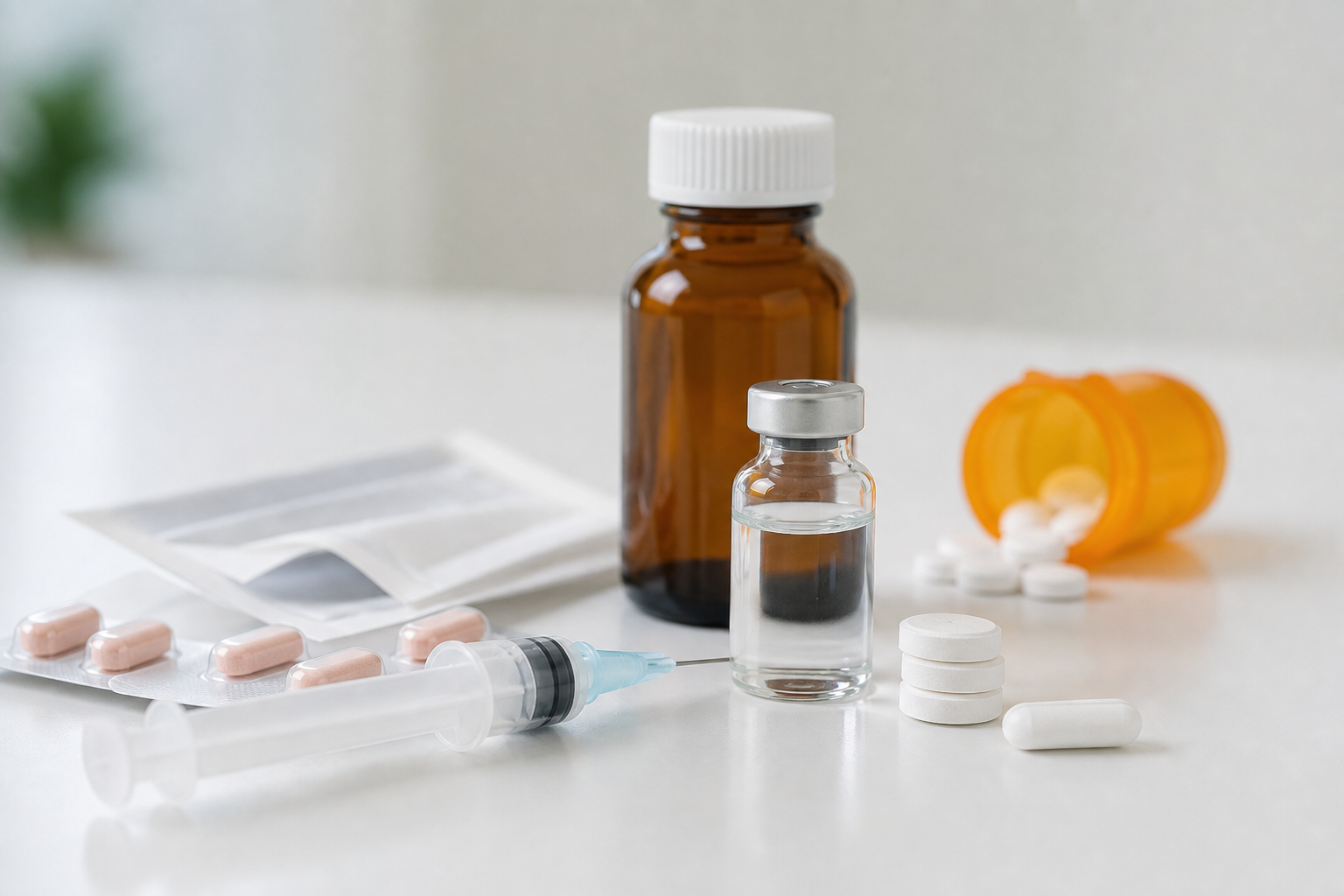
This comparison helps adults in Ontario and their families understand the monthly Sublocade shot (extended‑release buprenorphine) versus common opioid agonist therapy options such as Suboxone, methadone and Kadian. Read the mechanism, dosing and administration differences, typical eligibility and safety checks, where you can receive the injection in Ontario, and how Road To Recovery supports same‑day intake and follow up.
What the Sublocade shot is and how it works
Mechanism: buprenorphine extended release
The Sublocade shot is an extended‑release formulation of buprenorphine designed to maintain steady buprenorphine levels for treatment of moderate to severe opioid use disorder. It is intended to reduce the need for daily transmucosal dosing by releasing buprenorphine over about one month. For detailed clinical information consult the official product monograph and clinical review summaries.
How the injection is given
Sublocade is administered by a trained health professional as a subcutaneous injection into the abdominal area. The injection must be given in clinic by a clinician with appropriate training, and clinics provide standard local care for injection‑site reactions and monitoring. Patient aftercare information is typically supplied by the clinic at the first visit.
Dosing frequency and clinical setting
Sublocade is supplied for monthly administration in most treatment pathways. Each administration is performed in a supervised clinical setting rather than self‑administered at home, which removes daily pill or film handling and reduces diversion risk. Exact dosing schedules and clinical conditions are determined by the prescriber and the product guidance.
Direct comparison: Sublocade versus Suboxone, methadone and Kadian
Selection criteria explained
To compare options fairly we evaluate: active medication and mechanism, dosing frequency, administration setting and supervision, diversion risk, onset of therapeutic effect, monitoring needs, and typical side effects. These criteria reflect clinical priorities that help patients and clinicians choose between monthly injectable and daily oral or transmucosal options.
Comparison summary and practical takeaways
| Criterion | Sublocade (monthly injection) | Suboxone (buprenorphine/naloxone film) | Methadone (oral) | Kadian (extended‑release oral morphine) |
|---|---|---|---|---|
| Active agent | Buprenorphine extended‑release | Buprenorphine with naloxone transmucosal | Methadone, full opioid agonist | Extended‑release morphine |
| Dosing frequency | Monthly clinic injection | Daily supervised or take‑home films/tablets | Daily supervised or take‑home doses | Daily oral dosing, often once or twice daily |
| Administration setting | Clinic only, by clinician | Clinic or home per prescriber plan | Clinic or pharmacy with supervised dosing | Prescriber decides supervised vs take‑home |
| Diversion risk | Low, injectable and clinic controlled | Moderate, films can be diverted if unsupervised | Higher, oral liquid/tablets are diversion risk if unsupervised | Moderate to higher, depending on supervision |
| Onset of effect | Establishes steady levels over days; prior stabilization usually required | Rapid effect with transmucosal dosing | Full opioid agonist effect; dosing needs careful titration | Opioid agonist effect similar to morphine; titration required |
| Monitoring needs | Monthly clinic check, injection‑site monitoring | Frequent early follow up, urine screening as indicated | Frequent dosing oversight and monitoring | Clinical monitoring and urine screening as indicated |
| Common adverse effects | Injection‑site reactions, constipation, headache, nausea | Withdrawal suppression, nausea, headache, constipation | Sedation, constipation, QT concerns, respiratory depression risk | Constipation, sedation, nausea, respiratory depression risk |
Practical takeaways: the Sublocade shot removes daily dosing and lowers diversion risk because it is clinic‑administered monthly. Suboxone works well for people who prefer or need oral or transmucosal dosing and rapid dose adjustments. Methadone and Kadian remain appropriate when a full agonist or oral morphine approach better meets clinical needs. Discuss options with your clinician to match treatment to safety and lifestyle factors.
Who may be eligible for a Sublocade shot and required clinical steps

Typical eligibility flags
Clinicians commonly consider Sublocade for patients who are already stabilized on transmucosal buprenorphine and want a monthly option, when diversion or missed daily dosing is a concern, or when a patient prefers a clinic‑administered monthly medication. Eligibility is a medical decision made case by case and healthcare providers follow the product guidance when planning transitions.
Induction and stabilization requirements
Most pathways to Sublocade require that a patient is maintained and stable on transmucosal buprenorphine for a defined period before switching to the monthly injection. The exact induction sequence and stabilization checks are determined by the prescriber based on clinical guidelines and the product guidance. Your clinician will confirm the specific timeline for your situation.
What clinicians check before each injection
Before each monthly administration clinicians typically review clinical stability, assess injection sites, screen for side effects, confirm ongoing consent, and arrange any needed laboratory or urine tests. The supervised administration creates a monthly touchpoint for integrated care and coordination with mental health or social supports.
Common side effects, injection‑site reactions and safety checks
Local reactions and expected side effects
Injection site reactions such as pain, redness, nodules or itching are commonly reported and are monitored at the clinic visit. Systemic side effects can include nausea, constipation, headache and insomnia. Clinics review expected adverse events with patients before and after the first injection.
Overdose risk and precautions
Buprenorphine has a ceiling effect on respiratory depression compared with full opioid agonists, but co‑use with sedatives or heavy alcohol increases respiratory risk. Clinicians screen for interacting medications and advise patients about warning signs of sedation and breathing problems. Follow your clinic’s safety advice and report concerns promptly.
Reporting adverse events and follow up expectations
Report severe or unexpected reactions to your treating clinic so they can advise and document adverse events. Health care professionals also report events to regulatory authorities as required. Routine monthly follow up with the administering clinic supports early detection and management of side effects.
How to get a Sublocade shot in Ontario and cost considerations
Where it is administered in clinic
Sublocade is administered only in a clinical setting by a trained professional. Road To Recovery lists Sublocade among its medication options for opioid use disorder across its Ontario clinic network, which includes locations such as Toronto, Barrie, Brampton, Brantford, Hamilton, Newmarket, Orillia and Sault Ste. Marie. Contact a Road To Recovery clinic to confirm local availability and appointment processes.
Formulary and coverage context
Sublocade is identified by public and private payers as a treatment option, but individual coverage and prior authorization rules vary by plan. Check with your insurer or public plan for specific coverage details and ask your clinic to assist with benefits verification and prior authorization when needed.
Clinic cost resources and out of pocket considerations
Because coverage varies, Road To Recovery provides a dedicated cost page to help patients understand out‑of‑pocket options and clinic fees. For details about clinic pricing and what to expect financially see the Road To Recovery cost of Sublocade shot page or speak with clinic staff about benefit checks and prior authorization.
Road To Recovery cost of Sublocade shot
What to expect when starting Sublocade at Road To Recovery

Same day intake workflow
Road To Recovery offers streamlined intake: new OAT patients are triaged by a nurse and seen by a physician on the same day they start, and initial intake is initiated via a secure online portal to reduce delays. This nurse then physician flow helps patients begin treatment quickly while completing required assessments.
Psychiatry and mental health referrals
The clinic coordinates psychiatry referrals locally or virtually through partners, enabling integrated mental health support alongside OAT. If you need concurrent psychiatric care the clinic can arrange referral options and virtual consultations when appropriate.
Typical follow up and continuity of care
After the first injection patients usually return monthly for subsequent injections and clinical checks. The monthly visit is an opportunity to review medication effects, manage side effects, coordinate counselling or supports, and arrange prescriptions or pharmacy coordination for other medications as needed.
Decision checklist: is Sublocade the right option for you
When Sublocade is often preferred
- When a patient is stable on transmucosal buprenorphine and wants a monthly option to avoid daily dosing.
- When diversion or missed daily doses are a concern and clinic‑administered monthly dosing is desirable.
- When a monthly clinic touchpoint for integrated care and monitoring is preferred for continuity.
When Suboxone, methadone or Kadian may be better
- Suboxone may be preferred if rapid dose adjustment or an oral/transmucosal route is needed during induction.
- Methadone may be chosen when a full opioid agonist is clinically indicated or when other therapies are unsuitable.
- Kadian can be considered when sustained oral morphine is the preferred agonist approach for a particular clinical profile.
Common objections and clinician responses
- Concern: “I do not like injections.” Response: The injection is monthly and clinic‑administered, which reduces daily handling of medication.
- Concern: “Is it reversible if I change my mind?” Response: Buprenorphine effects wane as the depot dissolves over weeks, and clinicians can plan alternatives and supports during transition.
- Concern: “Will my insurer pay?” Response: Coverage varies; bring insurance details to the clinic and ask about prior authorization. Road To Recovery provides a cost resource to review options.
Next steps, key questions to take to your appointment and quick resources
Questions to ask your clinician
- Am I clinically eligible to switch to Sublocade and what induction steps are required?
- What side effects should I expect and how will they be managed?
- How does monthly monitoring work and who will coordinate psychiatry or counselling referrals?
- What are my coverage options and where can we check benefits or request prior authorization?
What to bring to your first appointment
- Photo identification and health card if available.
- A list of current medications, including any sedatives or alcohol use.
- Insurance information for coverage checks and prior authorization discussions.
- Contact details for any existing prescribers or supports you want included in care coordination.
Quick resources for deeper reading and clinic contact
- Official product monograph and clinical reviews are available from regulatory and academic sources; ask your clinician for copies if you want the primary literature.
- Road To Recovery clinic information and intake portal: Road To Recovery.
- Road To Recovery cost information for the injection: cost of Sublocade shot.
Frequently asked questions
What is a Sublocade shot and how often is it given?
Sublocade is a monthly, extended‑release subcutaneous injection of buprenorphine administered in clinic by a trained professional. It is intended to provide steady buprenorphine levels for opioid use disorder and is usually given once every month according to the product guidance.
Do I need to be on Suboxone before getting a Sublocade injection?
Most treatment pathways require stabilization on transmucosal buprenorphine prior to switching to Sublocade. The specific induction and stabilization timeframe is a clinical decision. Discuss your history with a prescriber to determine readiness and the appropriate timeline.
How does Sublocade compare with methadone and Kadian for withdrawal control?
Sublocade provides sustained buprenorphine effects and carries a lower respiratory depression risk than full agonists in most circumstances. Methadone and Kadian are full agonist options and are sometimes chosen for patients whose needs are better met by those agents. Choice depends on clinical factors, safety considerations and patient preference.
Will Ontario drug plans cover my Sublocade shot and how can I check?
Coverage varies by insurer and public plan and may require prior authorization. Sublocade is identified by payers as a treatment option, but individual coverage is determined by plan rules. Contact your insurer or bring benefits information to your clinic visit. Road To Recovery can assist with benefits checks and prior authorization.
What should I expect at my first Sublocade appointment at Road To Recovery?
Expect nurse triage and a physician assessment in a same‑day intake workflow, completion of the secure online intake, medical review of stabilization on transmucosal buprenorphine if applicable, and a clinic plan for the first injection and follow up. The clinic can arrange psychiatry referrals and ongoing supports as needed.
Ready to start or ask about the Sublocade shot? Begin intake and learn more at Road To Recovery: the official website.
Recent Post
-
 October 23, 2026
Cocaine Outpatient Treatment Outcomes: What Progress Really Looks...
-
 October 20, 2026
Family Resources for Addiction Recovery in Hamilton: Practical...
-
 October 19, 2026
How to Choose an Opioid Agonist Therapy Clinic...
-
 October 18, 2026
Kadian for Opioid Use Disorder: How Treatment Works...

You are Valued
Road to Recovery is an outpatient opioid detoxification center, with locations across Ontario.
- Confidential care
- Same-day support
- Personalized treatment