
Mental health referral psychiatry services connect people with psychiatrists and coordinated supports through a clear, clinician-led pathway. At Road To Recovery, referrals are arranged locally or virtually to fit your goals, current medications, and safety plan—so you start care quickly and continue with stable, judgment-free support throughout recovery.
Quick Answer
Mental health referral psychiatry services at Road To Recovery streamline access to in-person or virtual psychiatry across Ontario. Our team coordinates with trusted partners (including CAMH and OTN) and aligns psychiatric care with addiction medicine (Methadone, Suboxone, Sublocade, Kadian) so you can stabilize faster—often alongside same-day OAT intake.
At a Glance
A psychiatry referral is the fastest, safest way to access diagnosis, medication management, and therapy coordination. Road To Recovery integrates referrals with opioid agonist therapy and other addiction supports to reduce wait times, prevent treatment gaps, and maintain momentum in recovery.
- What you’ll learn: definitions, why referrals matter, step-by-step process, referral options, best practices, tools, and examples you can use today.
- Who this helps: individuals and families navigating opioid, alcohol, or cocaine use with co-occurring mental health needs; people seeking judgment-free, confidential care.
- Why this guide: based on Road To Recovery’s same-day intake flow and coordinated psychiatry referrals available across Ontario.
Local Tips
- Tip 1: If you’re traveling to Toronto clinics (St. James Town or Yonge & Dundas), time your visit to avoid rush hours on the DVP/Gardiner and use transit near Line 1 for easier access.
- Tip 2: Winter weather can affect appointments in Barrie, Brampton, Hamilton, and Orillia. Ask about virtual OTN visits to stay on track when roads are icy.
- Tip 3: If you work shifts in Sault Ste. Marie or Newmarket, request evening telepsychiatry options so your OAT dosing and follow-ups stay consistent.
IMPORTANT: These tips reflect how Road To Recovery coordinates local and virtual appointments so treatment remains consistent despite traffic, weather, or shift-work demands.

What Is a Mental Health Referral and Psychiatry Services?
Mental health referral psychiatry services link you to a psychiatrist for assessment, diagnosis, and medication management. In coordinated settings like Road To Recovery, referrals integrate with addiction treatment plans to address anxiety, depression, PTSD, ADHD, and other co-occurring conditions—confidentially and efficiently.
Core Definition and Scope
- Definition: A clinician-to-clinician request that shares your history, goals, and safety needs with a psychiatrist to initiate specialized care.
- Scope: Comprehensive assessment, differential diagnosis, medication optimization, therapy recommendations, and crisis/safety planning.
- Settings: In-person hospital/clinic visits or secure virtual care through trusted networks that protect confidentiality.
- Fit with addiction care: Psychiatric recommendations are aligned with Methadone, Suboxone (buprenorphine/naloxone), Sublocade, and Kadian to avoid interactions and support stability.
Why This Matters Right Now
- Co-occurrence is common: Many people with substance use disorders also experience mental health symptoms; integrated referrals reduce relapse risk by closing care gaps.
- Continuity is protective: Coordinated follow-ups and shared notes keep your care team aligned during early recovery when stability is most fragile.
- Access improves outcomes: Clear pathways and same-day OAT intake help patients engage earlier, a strong predictor of long-term success.
Self-contained answer: A psychiatry referral is a formal handoff from your clinician to a psychiatrist that accelerates expert assessment, medication decisions, and therapy planning. At Road To Recovery, this handoff is integrated with addiction medicine, so your mental health plan and OAT dosing evolve together—reducing wait times and preventing treatment gaps.
Why Mental Health Referrals Matter in Addiction Care
Referrals matter because they align psychiatric care with medication-assisted treatment. By coordinating Methadone, Suboxone, Sublocade, or Kadian with therapy and follow-ups, Road To Recovery reduces risks from unmanaged symptoms and supports safer, steadier recovery.
Stability, Safety, and Relapse Prevention
- Unified plan: One coordinated plan reduces medication conflicts and clarifies who manages which prescriptions.
- Timely checks: Scheduled psychiatry follow-ups catch side effects or symptom flares before they undermine recovery.
- Family support: With consent, families learn warning signs and how to support safety planning.
Real Examples from Our Clinics
- Shift worker in Hamilton: Evening telepsychiatry + OAT check-ins reduced missed doses and improved sleep, which stabilized work attendance.
- Student near Yonge & Dundas: Exam-period referral prioritized sleep/anxiety management without interrupting dosing at a nearby pharmacy.
- Parent in Orillia: Local community program added group sessions after a virtual psychiatric consult, easing travel demands.
Self-contained answer: Coordinated psychiatry prevents common pitfalls—like conflicting prescriptions or missed follow-ups—that can derail recovery. Road To Recovery integrates referrals with OAT, therapy, and family resources to maintain a single, safe plan tailored to your life, location, and goals.
How the Referral Process Works at Road To Recovery
Start intake, complete screening, and let our team route you to the right psychiatry option—local hospital clinics, community programs, or virtual care—while your addiction treatment begins or continues without interruption.
Step-by-Step Pathway
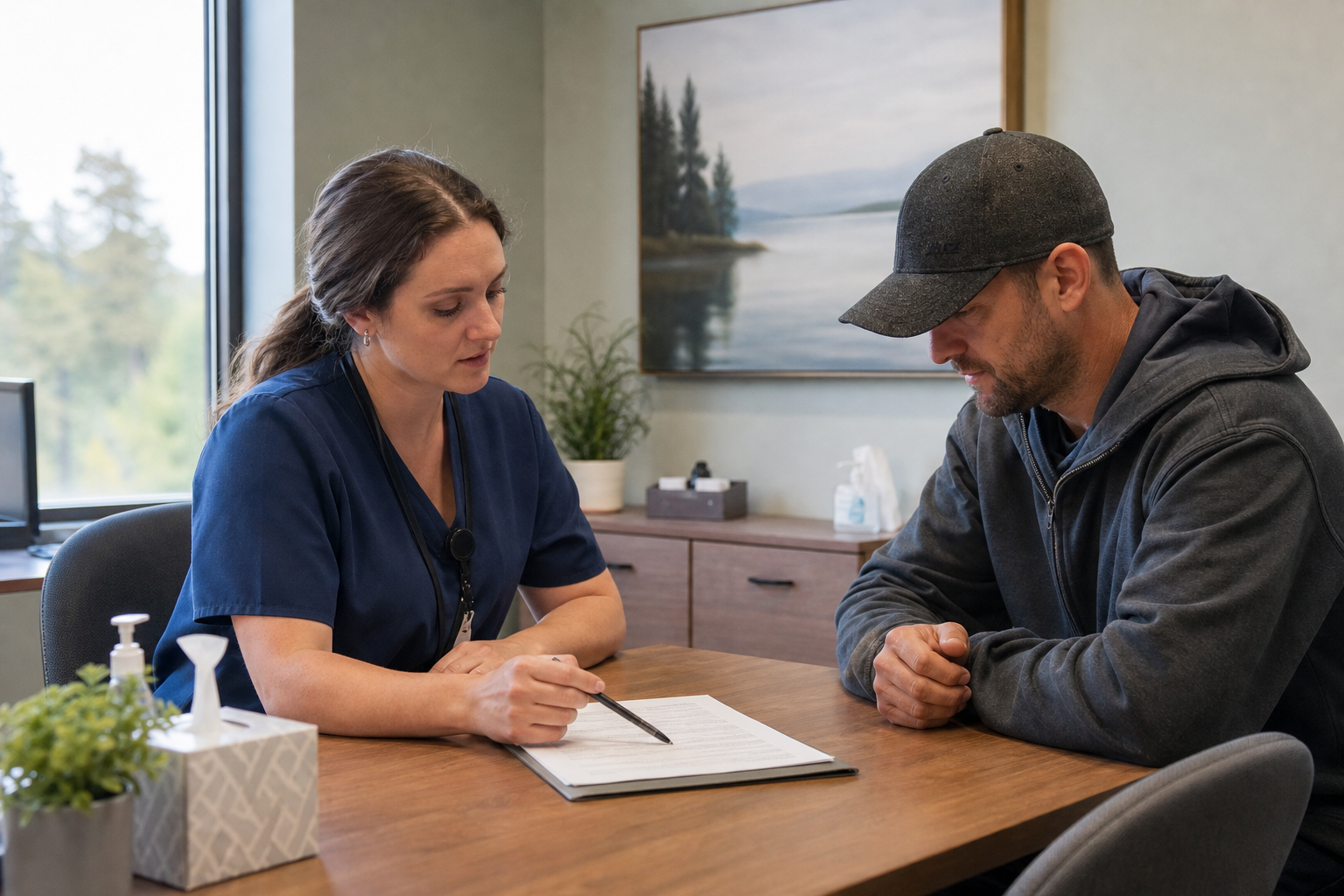
- Begin intake: Share medical/mental health history, current meds, past diagnoses, allergies, and goals.
- Same-day triage: New OAT patients are typically seen by a nurse and physician the day they start, keeping momentum strong.
- Referral matching: We select local or virtual psychiatry (OTN-enabled) based on urgency, distance, schedule, and your preferences.
- Documentation bundle: History, med list, labs, prior consults, and safety notes go with the referral to prevent delays.
- Warm handoff: We confirm receipt with the receiving service and schedule next steps inside your care plan.
What Speeds Things Up
- Be reachable: Keep voicemail clear and respond promptly to appointment calls or texts.
- Prefer virtual when possible: Telepsychiatry often books sooner than some in-person clinics and avoids travel/weather issues.
- Share specifics: Tell us about safety risks, pregnancy, withdrawal, or unstable housing so we can flag urgency.
For more on rapid access and privacy protections, see our guidance on confidential addiction treatment care and how we maintain a judgment-free mental health support experience across clinics.
Self-Contained: The Road To Recovery Workflow
Here’s the streamlined path: you start intake, we triage same day, and our team prepares a complete referral package for psychiatry while your OAT continues. If virtual care fits best, we book you through a secure network and loop your counselor into the plan. The result is no medication interruptions and faster, safer stabilization.

Types of Psychiatry Services and Referral Pathways
Road To Recovery routes referrals to hospital-based psychiatry, community mental health programs, or secure telepsychiatry—whichever aligns best with your location, schedule, urgency, and medication plan.
Common Pathways We Use
- Hospital-based psychiatry: Structured assessments, access to specialty clinics, diagnostic testing, and coordinated follow-up.
- Community programs: Counseling, case management, peer groups, and psychiatrist consults for ongoing support close to home.
- Virtual psychiatry (telehealth): Secure video consults that reduce travel time and often schedule faster—ideal for rural areas or shift workers.
Referral Pathway Comparison
| Pathway | Best For | Access Speed | Example Partner | Notes |
|---|---|---|---|---|
| Hospital-based psychiatry | Complex diagnostics or specialty clinics | Moderate | Regional hospital clinics | Strong coordination for diagnostics and specialty needs |
| Community mental health | Ongoing counseling and local supports | Moderate to Fast | Community programs | Adds groups and case management near home |
| Virtual psychiatry | Rural access, shift work, weather constraints | Often Fast | OTN-enabled clinics | Reduces travel time and no-shows; secure, private |
Self-contained answer: You don’t have to pick a path alone. Share what matters—childcare, work shifts, transportation—and we’ll match you to hospital, community, or virtual psychiatry. The goal is the same: coordinated, safe care that protects recovery progress while addressing mental health needs head-on.
Best Practices to Get Seen Faster
Submit a complete referral package, state urgency clearly, and allow virtual options. These three steps eliminate back-and-forth and accelerate booking for psychiatry while your addiction treatment continues uninterrupted.
Referral Checklist (Use This)
- Medication list: Include doses for Methadone, Suboxone, Sublocade, Kadian, and any psychiatric meds or supplements.
- Allergies and adverse effects: Prevents risky prescriptions and speeds medication selection.
- Prior diagnoses and consults: Attach summaries so psychiatrists don’t have to rework completed steps.
- Recent labs or vitals: Useful for medication decisions and safety planning.
- Safety notes: Indicate risks like suicidality, pregnancy, severe withdrawal, or unstable housing.
- Contact preferences: Phone, text, email, time windows—and a backup number to reduce missed calls.
Communicate the Right Details
- Symptoms and patterns: What worsens or improves them? Any triggers tied to work or home?
- Functioning: School, work, parenting duties—clarify what’s most affected right now.
- Goals: Sleep through the night, reduce panic, focus for exams, reunify with family, maintain employment, etc.
Want more on fast access? Explore our virtual psychiatric consultation benefits and how we sustain recovery counseling and ongoing support during transitions.
Self-contained answer: Speed depends on clarity and completeness. Bring a precise medication list, past diagnoses, and safety notes, then opt into telepsychiatry when possible. Road To Recovery uses this information to route your referral efficiently, confirm receipt, and book follow-ups that fit your schedule.
Tools and Resources You Can Use Today
Start with a secure clinic intake, choose virtual care when helpful, and lean on trusted education hubs and family resources. You don’t have to navigate alone—our team coordinates each step.
Practical Tools
- Secure intake portal: Share your story once; we circulate essentials to your care team.
- Telepsychiatry platforms: Private, secure video visits that work on common devices and help avoid weather or travel disruptions.
- Medication alignment: OAT plus psychiatric meds reviewed together to avoid conflicts and support stability.
- Family guides: Plain-language resources so loved ones know warning signs and how to help.
Helpful Reading from Our Network
- Understand dual diagnosis and why integrated care matters in our overview of mental health + addiction treatment.
- See how privacy, consent, and communications are handled in confidential addiction treatment care.
Self-contained answer: Use the intake portal to start quickly, ask for virtual options if travel is hard, and review family resources so supports are aligned. Road To Recovery coordinates psychiatry referrals and addiction medicine to create one consistent, practical plan you can follow.
Mini Case Studies: How Coordinated Referrals Change Outcomes
When psychiatry, OAT, and counseling are synchronized, people stabilize faster and maintain routines that protect recovery. These brief scenarios show how small process choices produce measurable differences.
Scenario Snapshots
- Toronto worker near St. James Town: After late-shift telepsychiatry, a medication adjustment reduced morning sedation; attendance at dosing visits improved.
- Barrie student: Exam-timed referral prioritized sleep and focus; counseling added brief CBT techniques between psychiatry visits.
- Sault Ste. Marie parent: Virtual consult avoided winter travel; a community group near home provided childcare-friendly support hours.
- Newmarket patient with ADHD: Coordinated stimulant planning respected OAT dosing and pharmacy pickup schedules to prevent confusion.
- Hamilton resident in housing transition: Case management plus telepsychiatry preserved contact when addresses changed.
What We’ve Learned
- Booking windows matter: Evenings/weekends reduce no-shows for shift workers.
- Documentation prevents delays: A complete meds + history bundle shortens back-and-forth with receiving clinics.
- Family involvement (with consent): Improves safety monitoring and adherence without adding stigma.
Self-contained answer: Coordinated referrals remove friction. Aligning psychiatry with OAT, counseling, and family supports cuts missed appointments, simplifies medications, and makes recovery tasks realistic within work, school, and parenting demands.
Thinking about next steps?
Request a coordinated psychiatry referral during your first visit. Our clinicians will align telehealth or local options with your OAT plan and follow-ups. Quiet, judgment-free, and designed to keep you moving forward.
FAQ
Psychiatry referrals through Road To Recovery are integrated with addiction care, offer local or virtual options, and are designed to maintain safety and momentum. Here are clear answers to common questions.
How do I start a psychiatry referral?
Begin with clinic intake. Our nurse and physician review your history and current medications, then prepare a referral package and match you to local or virtual psychiatry based on urgency and preferences. You’ll get a warm handoff and clear next steps.
Do I need a family doctor?
No. Our clinics can initiate referrals based on your intake and physician assessment. If you have a family doctor or therapist, we coordinate with them (with your consent) to keep care consistent.
Can I keep my current counselor or program?
Yes. Psychiatry complements therapy. We coordinate with your counselor or community program so medication decisions and therapy goals reinforce each other.
Is telepsychiatry private and secure?
Yes. Virtual visits run on secure platforms. We’ll confirm your preferred device, ensure a private setting, and schedule follow-ups that fit work or school commitments.
What if I miss an appointment?
Contact the clinic as soon as possible. We’ll help reschedule, manage medications safely, and reinforce reminders so your plan stays on track.
Conclusion and Next Steps
The fastest path to psychiatry is a coordinated one. Start intake, provide a complete history, and opt into virtual options if travel is a barrier. Road To Recovery routes referrals while aligning OAT and therapy, so you stabilize sooner and keep moving forward.
Key Takeaways
- One plan works best: Align psychiatry, OAT, and counseling to protect stability.
- Completeness speeds booking: A thorough referral package shortens wait times.
- Virtual options help: Telepsychiatry reduces no-shows and travel friction.
- Family support matters: With consent, involve loved ones in safety plans.
Action Steps
- Start your intake and ask for a psychiatry referral.
- Bring a precise medication and diagnosis history.
- Choose virtual visits when schedules or weather complicate travel.
- Invite a trusted support to learn warning signs and follow-up plans.
Ready to begin?
Road To Recovery coordinates mental health referral psychiatry services across Ontario. Ask about local and virtual options during your first visit so your plan fits your life from day one.
Recent Post




You are Valued
Road to Recovery is an outpatient opioid detoxification center, with locations across Ontario.
- Confidential care
- Same-day support
- Personalized treatment