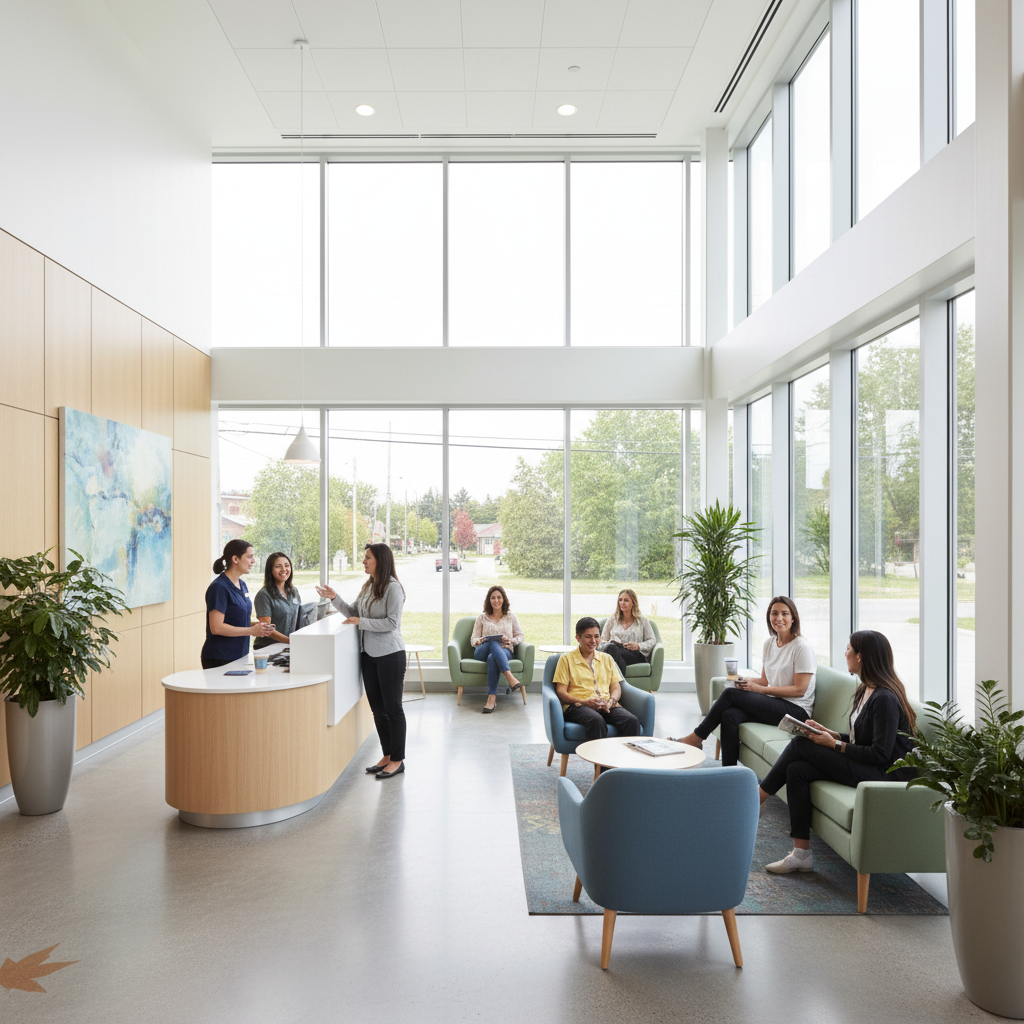
Treatment facilities are licensed programs that deliver structured medical, psychological, and social support for substance use and mental health needs. They include inpatient centers, outpatient clinics, and hybrid models. Across all over ontario, Road To Recovery provides outpatient addiction care with same-day intake for opioid agonist therapy and coordinated psychiatry referrals to help people start recovery fast.
By BRIAN TAYLOR • Last updated: 2026-06-01
Above-the-Fold Overview
Treatment facilities range from inpatient hospitals to outpatient clinics that provide medical and counseling services. If you need fast, judgment-free help in Ontario, outpatient programs like Road To Recovery offer same-day intake for opioid treatment, multiple medication options, and coordinated mental health referrals so you can begin safely and quickly.
Use this complete guide to understand options, compare settings, and map your next step with clarity.
- Understand what treatment facilities are and how they differ
- See how outpatient care works (intake → medication → follow-up)
- Compare inpatient vs outpatient in a practical table
- Learn best practices to choose a safe, effective program
- Find tools, resources, and real-world examples from Ontario
At a Glance
- Who this is for: People in Ontario seeking confidential, outpatient addiction care and families supporting a loved one.
- Primary focus: Outpatient addiction treatment facilities (opioid agonist therapy with Methadone, Suboxone, Sublocade, Kadian) and connected mental health supports.
- Immediate help: Same-day nurse and physician assessment for new OAT intakes with Road To Recovery.
Local considerations for all over ontario
- Plan around winter weather: schedule medication pickups and virtual check-ins ahead of storms to avoid missed doses.
- Peak periods: mornings and early evenings are busiest. Ask about flexible dosing windows or appointment slots.
- Virtual supports: when travel is hard, request telehealth check-ins and psychiatry referrals coordinated through trusted partners.
Overview
Treatment facilities are healthcare programs that diagnose, treat, and support recovery from substance use and mental health challenges. They operate across levels of care, from hospital-based detox to community outpatient clinics. The right fit depends on safety, medical needs, and daily life factors like work, school, and family.
In our experience, most people weigh two things first: medical safety and daily life disruption. Outpatient settings reduce disruption while maintaining medical oversight; inpatient settings maximize structure and 24/7 safety. Both can be life-changing when matched appropriately.
- Core services: medical evaluations, medication management, counseling, relapse-prevention planning, and family support.
- Access: some programs offer streamlined recovery pathways with same-day starts for opioid care.
- Continuity: facilities coordinate with psychiatry, primary care, and community supports so your plan doesn’t stop at discharge.
What Are Treatment Facilities?
A treatment facility is a clinical program—hospital, residential center, or outpatient clinic—that delivers evidence-based care for addiction and mental health. Services often include medical assessment, medications, counseling, and aftercare coordination designed to stabilize symptoms and support long-term recovery.
Think of treatment facilities as a network of doors into recovery. The door you choose should match your risks, goals, and schedule. For many in Ontario, outpatient addiction clinics provide the safest, fastest entry—especially when same-day intake allows you to begin medication-assisted treatment without delay.
- Inpatient/residential: 24/7 supervised environments for higher-risk withdrawal, medical monitoring, and intensive therapy.
- Outpatient clinics: regular visits for medications like Methadone, Suboxone, Sublocade, or Kadian, plus counseling and recovery planning.
- Hybrid/IOT/IOP models: structured day programming without overnight stays; good for stability plus flexibility.
Road To Recovery operates outpatient addiction treatment clinics across Ontario, offering opioid agonist therapy (OAT) alongside alcohol, cocaine, gambling, and smoking cessation supports in a confidential, judgment-free setting.
Why Treatment Facilities Matter
The right facility improves safety, reduces relapse risk, and connects you to ongoing support. Matching your medical needs to the correct level of care—outpatient vs inpatient—improves stability, keeps life on track, and speeds up access to medications and therapy.
Here’s the thing: recovery is not one size fits all. The best outcomes happen when services align with your reality—work schedules, family responsibilities, transportation, and mental health needs. Facilities that offer multiple medication options and fast intake remove dangerous waiting periods.
- Safety impact: supervised medication induction lowers overdose risk while withdrawal is managed.
- Speed to care: same-day intake prevents “drop-off” between asking for help and starting treatment.
- Whole-person support: psychiatry referrals and mental health services address anxiety, depression, or trauma alongside substance use.
- Family engagement: resources for loved ones improve support at home and reduce misunderstandings.
For those starting opioid agonist therapy, we’ve found that beginning within hours of first contact reduces early relapse risk because symptoms are stabilized before they spiral. That’s why Road To Recovery prioritizes nurse triage and same-day physician assessment for new OAT intakes.
How Treatment Facilities Work: From First Call to Follow-Up
Most programs follow a simple arc: screening and intake, assessment and diagnosis, treatment planning, active care (medications and therapy), and aftercare. Outpatient clinics streamline this flow so you can start quickly, often the same day for opioid treatment, then maintain weekly-to-monthly follow-ups.
While every program differs, the core flow is consistent. Here’s how it typically works at an outpatient addiction clinic like Road To Recovery.
- Screening and intake: brief phone or portal screening, consent forms, and initial nurse triage to clarify safety needs.
- Assessment: physician evaluation, medical history, current use patterns, withdrawal risk, and co-occurring mental health review.
- Treatment plan: shared decision-making; choose medications (Methadone, Suboxone, Sublocade, Kadian) and counseling frequency.
- Active care: medication induction/titration, cravings and withdrawal monitoring, therapy or skills sessions, and family education.
- Aftercare: recovery coaching, relapse-prevention strategies, primary care/psychiatry referrals, and periodic plan reviews.

To keep momentum, many patients combine medication with brief, focused counseling. If you’re exploring your options, this overview of medication-assisted treatment benefits explains how stabilization supports long-term change.
Process Snapshot (Outpatient)
| Stage | What Happens | Timeframe |
|---|---|---|
| Intake | Nurse screens, collects history, flags safety issues | Same day |
| Assessment | Physician evaluates and confirms diagnosis | Same day |
| Treatment start | Medication induction with monitoring | Hours–days |
| Active care | Follow-ups, counseling, dose adjustments | Ongoing |
| Aftercare | Relapse-prevention, psychiatry/primary care links | Ongoing |
Types of Treatment Facilities and Approaches
Facilities fall into three broad types: inpatient/residential (24/7 care), outpatient clinics (scheduled visits), and hybrid day programs. Outpatient addiction clinics—like Road To Recovery—offer multiple opioid medications, counseling, and fast access, making them ideal when you need evidence-based care without leaving daily life.
Outpatient addiction clinics (Ontario)
- Services: opioid agonist therapy (Methadone, Suboxone, Sublocade, Kadian), alcohol and cocaine support, gambling treatment, smoking cessation, and mental health referrals.
- Good for: people who can manage safely at home, need to work or care for family, and benefit from flexible scheduling.
- Example: Road To Recovery’s care clinics guide explains how judgment-free visits and reduced wait times keep recovery moving.
Inpatient/residential programs
- Services: 24/7 supervision, detox management, intensive therapy, and structured routines.
- Good for: high medical risk, unsafe home environments, or situations where round-the-clock monitoring is needed.
- Note: Many people step down to outpatient after stabilization to maintain gains with community supports.
Hybrid and intensive outpatient (IOP/PHP)
- Services: day programming, group therapy, skills training, and medical check-ins without overnight stays.
- Good for: those between levels of care—need structure but can sleep at home.
- Tip: Confirm how these programs coordinate with medication providers to avoid gaps.
Specialized supports that often connect to facilities
- Psychiatry referral services: facilities coordinate local or virtual psychiatry for co-occurring conditions.
- Safer Opioid Supply (SOS): for eligible patients, safer supply programs aim to reduce harm while engaging people in care.
- Family resources: education and support reduce conflict and improve outcomes.
Inpatient vs Outpatient: Practical Comparison
Choose inpatient when medical risk or safety requires 24/7 monitoring. Choose outpatient when you can safely stabilize with scheduled visits and prefer minimal disruption to work or family. Many people begin with outpatient OAT, then add counseling and psychiatric support for whole-person care.
| Factor | Inpatient/Residential | Outpatient Clinic |
|---|---|---|
| Safety | 24/7 monitoring; ideal for high-risk withdrawal | Scheduled monitoring; suitable when medically stable |
| Disruption | High (away from home/work) | Low (stay home; attend visits) |
| Medication access | Onsite induction and supervision | Rapid induction and pharmacy coordination |
| Length of stay | Days to weeks | Weeks to months; tailored |
| Transition | Often step down to outpatient | Can step up to inpatient if risk increases |
Not sure where to begin? This substance treatment programs guide breaks down common pathways so you can decide with confidence.
Best Practices for Choosing a Safe, Effective Facility
Prioritize medical safety, access speed, evidence-based medications, coordinated mental health care, and clear follow-up. Verify same-day intake options, ask how psychiatry referrals work, and confirm whether counseling and family resources are built into your plan.
What to verify on your first call
- Same-day intake: can you see a nurse and physician today for opioid treatment?
- Medication options: confirm Methadone, Suboxone, Sublocade, and Kadian are available.
- Mental health support: ask how psychiatry referrals are coordinated and how soon therapy can begin.
- Judgment-free care: look for plain-language communication and respectful intake processes.
- Family involvement: request materials for loved ones and consented updates.
Actionable checklist
- Write down your top three goals (e.g., reduce cravings, sleep better, rebuild trust).
- List barriers (transportation, childcare, work schedule) and discuss workarounds.
- Confirm follow-up cadence (weekly, biweekly, or monthly) and how to reach the team between visits.
- Ask how missed appointments or dose issues are handled to prevent setbacks.
- Bookmark supportive content like our support treatment guide for encouragement between visits.
Tools and Resources You Can Use Today
Use a secure intake portal to start quickly, combine medication with brief counseling, and request psychiatry referrals when needed. Between visits, rely on simple checklists and family handouts that reinforce your plan and reduce confusion at home.
- Medication + skills: pairing OAT with coping-skill sessions improves daily stability.
- Family handouts: share a one-page plan that explains triggers, supports, and emergency steps.
- Check-in rhythm: keep short, regular follow-ups; consistency beats intensity.
- Education: for alcohol risks and acute warning signs, see this patient-friendly alcohol misuse overview and guidance on alcoholic poisoning.
If you’re weighing where to begin, our practical overview of care clinics in Ontario outlines visit flow, privacy safeguards, and how to keep momentum between appointments.

Case Studies and Real-World Examples
Small, specific changes add up: same-day medication start, brief counseling, and clear family support. The following short scenarios show how outpatient facilities coordinate OAT, mental health referrals, and practical problem-solving to keep recovery on track in Ontario.
Scenario 1: Getting started fast
- Challenge: escalating cravings and missed work days.
- Action: same-day nurse triage and physician assessment; Suboxone induction with close follow-up.
- Support: three brief counseling sessions on triggers and sleep; family receives a one-page support guide.
- Result: stabilized symptoms and return to a normal schedule within days.
Scenario 2: Co-occurring anxiety
- Challenge: panic episodes complicating recovery.
- Action: physician adjusts medication; referral for brief therapy and psychiatry consult.
- Support: grounding techniques and structured check-ins reduce symptom spikes.
- Result: fewer panic episodes, improved adherence, and stronger coping.
Scenario 3: Transition after inpatient
- Challenge: maintaining gains after residential care.
- Action: rapid outpatient follow-up with OAT continuity and relapse-prevention planning.
- Support: pharmacy coordination and family education to smooth the handoff.
- Result: steady routine without losing momentum.
These patterns reflect what we see daily: when access is fast and supports are coordinated, people spend more time practicing recovery skills and less time stuck in logistics.
Frequently Asked Questions
Here are concise answers to common questions about treatment facilities, intake speed, medication options, and how outpatient programs coordinate mental health support and family resources. Use these to set expectations and plan your first visit with less stress.
What is the difference between inpatient and outpatient treatment facilities?
Inpatient programs provide 24/7 supervision and are best when medical risk or safety requires constant monitoring. Outpatient clinics deliver scheduled visits for medications and counseling, allowing you to live at home and work or study while receiving evidence-based care.
How fast can I start opioid agonist therapy at an outpatient clinic?
At Road To Recovery, new opioid addiction patients are seen by a nurse and then a physician the same day intake begins. This rapid start stabilizes withdrawal and cravings quickly so you can focus on counseling, coping skills, and normal routines.
Which medications do outpatient treatment facilities commonly use for opioid use disorder?
Common evidence-based options include Methadone, Suboxone (buprenorphine/naloxone), Sublocade (extended-release buprenorphine), and Kadian (morphine sulfate extended-release). Your clinician will recommend a choice based on medical history, goals, and response.
Do outpatient facilities help with mental health concerns too?
Yes. Many outpatient clinics coordinate local or virtual psychiatry referrals and provide counseling for anxiety, depression, trauma, and other co-occurring concerns. Integrated care improves stability and reduces relapse risk.
Can my family be involved in my treatment plan?
With your consent, families can receive education, share observations, and support recovery goals. Clinics often provide handouts and simple communication plans that help loved ones respond consistently during stressful moments.
Key Takeaways and Next Steps
Match the level of care to your safety and daily life. If you can stabilize at home, outpatient OAT with fast intake and counseling is often the most practical starting point. Confirm medication options, follow-up cadence, and how psychiatry referrals and family supports will be coordinated.
- Right level, right time: choose inpatient for 24/7 safety; choose outpatient when stable with support.
- Speed matters: same-day intake and rapid induction reduce early relapse risk.
- Whole-person care: combine medication, skills training, and mental health support.
- Family helps: simple home plans improve consistency and confidence.
- Keep learning: review MAT insights and compare clinic options as you plan.
Final CTA: If you’re in Ontario and ready to begin, explore our recovery and treatment guide and ask about same-day intake to start safely—today.
Recent Post
-
 October 23, 2026
Cocaine Outpatient Treatment Outcomes: What Progress Really Looks...
-
 October 20, 2026
Family Resources for Addiction Recovery in Hamilton: Practical...
-
 October 19, 2026
How to Choose an Opioid Agonist Therapy Clinic...
-
 October 18, 2026
Kadian for Opioid Use Disorder: How Treatment Works...
You are Valued
Road to Recovery is an outpatient opioid detoxification center, with locations across Ontario.
- Confidential care
- Same-day support
- Personalized treatment