
Give up smoking medication refers to FDA‑approved therapies that reduce nicotine withdrawal and cravings so you can quit for good. These include nicotine replacement therapy, bupropion SR, and varenicline. Across all over ontario, Road To Recovery’s Smoking Cessation Program pairs these medicines with counseling and same-day support to help you plan, start, and maintain a smoke‑free life.
By BRIAN TAYLOR · Last updated: 2026-06-09
Overview and Table of Contents
This complete guide explains quit‑smoking medications, when and how to use them, and how Road To Recovery supports patients across Ontario. You’ll see clear steps, safety tips, a comparison table, and local access options, so you can choose a plan that fits your health, schedule, and motivation.
Quitting is possible. The right plan turns willpower into a routine you can follow. In this guide, you’ll find:
- What give up smoking medication means and how it works
- Which options fit different smoking patterns and health histories
- A 4‑phase step‑by‑step plan with checklists
- Side effects, interactions, and what to watch for
- How our Ontario clinics provide same‑day help and ongoing guidance
What Is “Give Up Smoking” Medication?
Give up smoking medication includes nicotine replacement therapy (patches, gum, lozenges, inhalers) and non‑nicotine prescriptions (bupropion SR, varenicline). These treatments ease withdrawal, curb cravings, and improve quit success when paired with counseling and routine follow‑ups.
In plain terms, these medicines target two things: your body’s nicotine dependence and the brain pathways that drive cravings. When combined with behavioral support, they can double or even further improve the odds of staying smoke‑free over the long term. At Road To Recovery, we match medication choice to your quit date, smoking pattern, and medical history.
- Nicotine Replacement Therapy (NRT): Delivers a clean, low dose of nicotine without toxins from smoke.
- Bupropion SR: A prescription antidepressant that reduces withdrawal and reward from smoking.
- Varenicline: A prescription partial agonist that blocks nicotine’s “high” and relieves cravings.
Medication is most effective when it fits your daily routine. We help you pick a start date, create reminders, and set follow‑ups through our Smoking Cessation Program, available across our Ontario network.
Why It Matters Now
Using quit‑smoking medication reduces withdrawal, makes urges more manageable, and raises your odds of long‑term abstinence. The sooner you start, the faster you protect your heart, lungs, and energy—and the easier it becomes to stick with your plan.
Smoking harms nearly every organ and drives risks for heart disease, stroke, lung disease, and many cancers. Early wins matter: oxygen levels improve within hours of quitting, and cardiovascular risk drops in weeks to months. When cravings strike, medication turns a “white‑knuckle” moment into a manageable urge you can ride out.
- Cravings peak during the first 72 hours and recur with triggers (stress, after meals, driving).
- Quit success improves when people pair medication with brief counseling and follow‑ups.
- Relapse risk falls as you build routines—especially with a written plan and check‑ins.
Our clinicians in all over ontario use brief, structured visits to adjust dosing, troubleshoot triggers, and keep you accountable. Same‑day support helps you start when motivation is high.
How Quit‑Smoking Medications Work
Quit‑smoking medicines stabilize nicotine levels or modulate brain receptors to blunt withdrawal and reduce the “reward” from smoking. This lowers the intensity of cravings and makes behavior change easier to sustain day after day.
Here’s the science in practical terms. Nicotine rapidly activates brain receptors, releasing dopamine that reinforces the habit loop. Removing nicotine causes irritability, low mood, poor focus, and strong urges. Medicines interrupt this loop:
- Patches deliver steady nicotine over 16–24 hours, preventing big dips that trigger urges.
- Gum/lozenges provide on‑demand relief during triggers like coffee breaks or commutes.
- Inhalers offer quick relief and hand‑to‑mouth behavior replacement.
- Bupropion SR eases withdrawal by affecting norepinephrine/dopamine pathways.
- Varenicline partially stimulates nicotine receptors while blocking full reinforcement if you slip.
In our experience, the best results come from pairing a baseline (patch) with a rescue option (gum/lozenge) or using varenicline as the primary treatment when appropriate, then layering structured check‑ins. That’s the model we follow in our medication options overview.
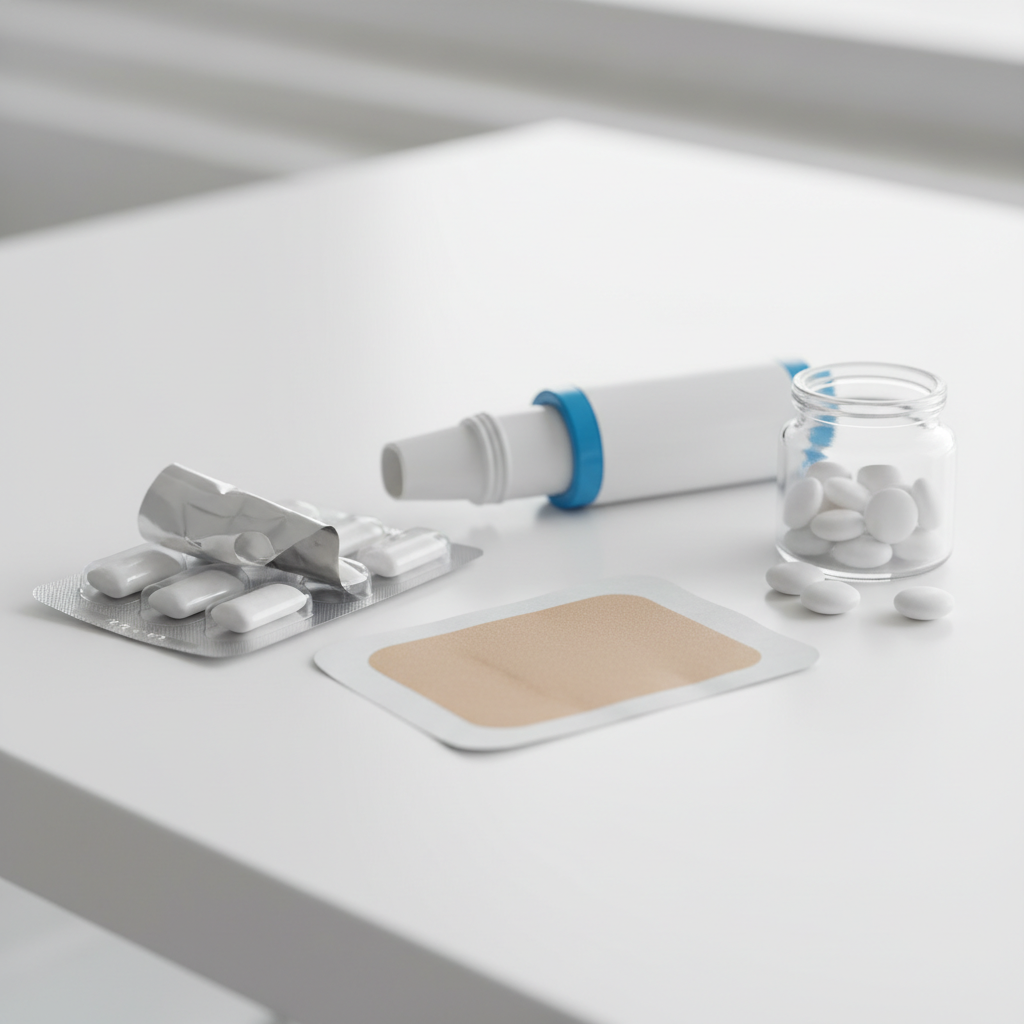
Medication Types and When to Use Them
Choose NRT for flexible control, varenicline for strong craving relief and blocking effects, and bupropion SR when mood symptoms or weight concerns are prominent. Your medical history, preferences, and timing drive the best fit.
Nicotine Replacement Therapy (NRT)
- Patch (steady control): Good for pack‑a‑day smokers or morning cravings. Typical course: 8–12 weeks with taper.
- Gum/lozenges (on‑demand): Ideal for situational urges (after meals, driving). Chew‑and‑park technique for gum improves absorption.
- Inhaler (behavior replacement): Helps when hand‑to‑mouth triggers are strong; provides quick relief for spikes.
- Combining NRT: Patch as foundation plus gum/lozenge for breakthrough cravings is common and effective.
Bupropion SR (Prescription)
- Start 1–2 weeks before your quit date to reach steady levels by Day 0.
- Good fit if you have low mood or worry about post‑quit weight gain.
- Not ideal if you have a seizure disorder or specific medication interactions; review history first.
Varenicline (Prescription)
- Start 1 week before quitting or with a flexible quit window approach.
- Best for intense cravings and reinforcement blocking (cigarettes feel less satisfying).
- Common side effects include nausea and vivid dreams; dose titration helps.
We tailor choices in clinic, then document your schedule in a simple plan you can follow. If you’re unsure where to begin, our personalized treatment planning session walks through scenarios and selects a starting option with backups.
Step‑by‑Step Quit Plan (4 Phases)
A structured quit plan breaks a big goal into four phases: prepare, start, stabilize, and sustain. Each phase has clear actions, check‑ins, and small wins that build momentum and reduce relapse risk.
Phase 1: Prepare (Days −14 to 0)
- Pick a quit date within two weeks; add reminders to your phone.
- Start bupropion SR or varenicline if prescribed on the recommended timeline.
- Buy NRT supplies and practice gum/lozenge techniques.
- List triggers (morning coffee, stress at work, driving) and 2–3 alternative actions for each.
- Book a brief counseling visit for quit‑day planning.
Phase 2: Start (Quit Day to Week 2)
- Apply your patch after morning shower; carry gum/lozenges everywhere.
- Use urge surf: cravings peak then pass in minutes—delay, deep breathe, distract.
- Text a supporter; report wins daily.
- Slip? Don’t restart the clock—reset and use your rescue option immediately.
Phase 3: Stabilize (Weeks 3–8)
- Taper NRT or continue prescriptions per plan; log craving intensity each night (0–10).
- Change routines that pair with smoking (new route to work, new post‑meal ritual).
- Schedule a check‑in to review sleep, mood, and side effects; adjust dosing.
Phase 4: Sustain (Weeks 9–12+)
- Continue maintenance dosing if recommended; taper with your clinician’s guidance.
- Keep a relapse rescue kit—mint gum, water bottle, a short walk playlist.
- Celebrate milestones at 1, 3, and 6 months; reflection builds identity as a non‑smoker.
Dosages, Schedules, and Comparison
Use steady dosing for baseline control and on‑demand dosing for spikes. The table below summarizes typical use patterns, strengths, and considerations so you can discuss a precise schedule with your clinician.
| Medication | Primary Use | When to Start | Typical Duration | Good Fit For | Watch Outs |
|---|---|---|---|---|---|
| Nicotine Patch | Baseline control | Quit Day | 8–12 weeks (taper) | Daily smokers, morning cravings | Skin irritation; remove at bedtime if vivid dreams |
| Nicotine Gum/Lozenge | Breakthrough urges | Quit Day | 8–12 weeks | Situational triggers, on‑demand relief | Jaw/heartburn if used too fast; avoid acidic drinks 15 min prior |
| Nicotine Inhaler | Quick relief + habit replacement | Quit Day | 12 weeks+ | Strong hand‑to‑mouth cues | Throat irritation early on |
| Bupropion SR (Rx) | Reduce withdrawal | 1–2 weeks before | 12 weeks+ | Low mood, weight concerns | Not for seizure disorder; med interactions review |
| Varenicline (Rx) | Block nicotine reward + cravings | ~1 week before | 12 weeks+ (may extend) | Intense cravings | Nausea/vivid dreams; dose titration helps |
These are common clinical patterns, not one‑size‑fits‑all rules. We individualize schedules based on your responses during the first two weeks, when most adjustments are made. If you need extra support, we can coordinate mental health referrals through trusted partners and our Ontario support network.
Safety, Side Effects, and Interactions
Most quit‑smoking medicines are well‑tolerated, with predictable side effects like nausea (varenicline) or skin irritation (patch). A brief safety screen and follow‑ups keep you on track and help you manage issues early.
- Patch: Redness/itching at the site; rotate placement. Remove at bedtime if dreams are bothersome.
- Gum/Lozenge: Heartburn or hiccups if used too quickly. Use the chew‑and‑park method; avoid acidic drinks beforehand.
- Inhaler: Throat or mouth irritation, usually fading after a few days.
- Bupropion SR: Dry mouth, insomnia. Take earlier in the day; avoid if you have a seizure disorder.
- Varenicline: Nausea and vivid dreams are common; taking with food and titrating slowly helps.
Drug safety and quality matter. Recent industry reviews have focused on nitrosamine impurities across several drug classes, prompting added quality controls in manufacturing and testing. For context on this topic in relation to varenicline and other medicines, see nitrosamine testing in varenicline and a broader limits of nitrosamine impurities overview from an industry laboratory perspective.
If you’re taking other medications, bring your list. We screen for interactions and coordinate with your primary care provider. At select locations, our walk‑in services can streamline same‑day questions that pop up during the first weeks.
Combining Medications and Counseling
Pairing medication with brief counseling and regular check‑ins dramatically improves quit success. The medicine quiets cravings; coaching locks in new routines that last beyond the prescription.
We keep counseling simple and practical. In 10–15 minute visits, we target your top two triggers, rehearse a replacement behavior, and set a micro‑goal for the week. We use the same structure across our programs, from smoking cessation to stimulant recovery support, because routine and accountability work.
- Brief counseling: Identifies triggers, scripts new habits, and anticipates roadblocks.
- Scheduled check‑ins: Adjust dosing, measure progress, and reinforce wins.
- Family involvement: When you choose, a supporter gets simple instructions to help you through rough patches.
Results improve further when plans are visible. We give you a one‑page plan for the fridge and phone reminders for doses and cravings. If anxiety, depression, or trauma complicate quitting, our team coordinates psychiatry referrals locally or virtually.
When Quitting Is Hard: Troubleshooting
If urges stay strong after two weeks, dose may be low, triggers under‑addressed, or routines unchanged. Tweak one variable at a time—dose, timing, or coping skill—and recheck within 7 days.
- Morning cravings despite patch: Consider a higher patch strength or add a lozenge upon waking.
- After‑meal slips: Stand up, brush teeth, or take a 5‑minute walk immediately after eating.
- Stress spikes: Pair a breathing routine (box breathing) with a lozenge; schedule a midday check‑in.
- Vivid dreams: Remove the patch at bedtime and apply a new one in the morning.
- Nausea on varenicline: Take with food, split the dose, or slow the titration under guidance.
When slips happen, we treat them as data. What triggered it? What tool was missing? The next day’s plan gets one change—not five. This single‑change rule keeps your approach stable and testable.
Tools and Resources
You don’t need dozens of apps or gadgets. A short checklist, calendar reminders, and two evidence‑based coping skills cover most situations. Add specialized tools only if you truly need them.
- Quit Plan One‑Pager: Your medicines, times, and rescue steps in one place.
- Phone reminders: Doses, check‑ins, and 2–3 daily “trigger checks.”
- Rescue kit: Water bottle, mint gum, and a quick walk playlist.
- Clinic support: Same‑day guidance through our Smoking Cessation Program.
- Community care: Navigation tips in our community health service guide.
Education matters too. Understanding how medications are made safer over time builds confidence. For broader context on product safety trends (including inhalation products), review this industry perspective on extractables and leachables testing.

Mini Case Examples from Ontario
Real‑world wins follow a pattern: right medication, right timing, and quick adjustments. These brief, anonymized scenarios show how small tweaks turn the corner from struggling to stable.
- Morning‑first smoker (daily on waking): Patch 21 mg + 2 mg lozenges on waking and after meals. After week 1, vivid dreams led to removing the patch at bedtime. Cravings fell from 8/10 to 3/10 by week 3.
- Stress‑triggered smoker (workday spikes): Varenicline start 7 days pre‑quit with a lunchtime breathing routine. Early nausea eased with food. Two slips in week 2; adding a 2 mg gum at 3 p.m. stabilized afternoons.
- Weight‑concerned quitter: Bupropion SR 2 weeks pre‑quit + 4 mg gum for post‑meal urges. Added evening walks and a supporter text at 9 p.m. Zero cigarettes by day 10; maintained at 12 weeks.
These patterns mirror what we see across our clinics—most changes are minor but targeted. Documenting a single daily win (“I drove home without stopping for cigarettes”) keeps motivation visible.
Local Access and Starting Today
Road To Recovery offers smoking cessation care across multiple Ontario locations with reduced wait times. New patients can begin through a secure intake portal, meet a nurse, and see a clinician promptly for a tailored quit plan.
We operate an Ontario‑wide network focused on accessibility and judgment‑free care. If you’re ready to stop, our team can help you begin today, not “someday.” Explore our Smoking Cessation Program and related personalized planning options to get started.
Local considerations for all over ontario
- Plan for winter triggers and travel time. Keep extra lozenges and a spare patch in your bag when weather or transit delays add stress.
- Use seasonal routines to your advantage. A new outdoor habit in spring/summer (brief walk after meals) replaces the cigarette break.
- Leverage our reduced wait times. When motivation spikes, same‑day nurse support helps you start medications without losing momentum.
Frequently Asked Questions
These quick answers cover the most common questions about quit‑smoking medications—timing, combinations, safety, and what to do if you slip. For personalized guidance, book a brief visit and bring your medication list.
Can I combine the nicotine patch with gum or lozenges?
Yes. Many people use a patch for steady control and gum or lozenges for breakthrough urges. This combo is common and effective. Your clinician will match strengths to your smoking pattern and adjust during the first two weeks.
When should I start bupropion SR or varenicline?
Start bupropion SR 1–2 weeks before your quit date and varenicline about 1 week before (or use a flexible quit approach if appropriate). This timing builds steady medication levels so cravings are easier to manage on Day 0.
What if I have a cigarette during my quit attempt?
Treat it as data, not failure. Identify the trigger, use your rescue option (gum, lozenge, inhaler), and get back on plan right away. We usually make one small change—dose, timing, or coping skill—and recheck within a week.
Are there safety concerns with quit‑smoking medicines?
These medications are well‑studied and generally well‑tolerated. Side effects are usually manageable (for example, nausea with varenicline or skin irritation with the patch). Share your full medication list to screen for interactions.
How long should I stay on medication?
Many plans run 8–12 weeks, with options to extend if cravings persist. We individualize tapering based on your progress and triggers. The goal is stability first, then a gradual step‑down that feels comfortable.
Best Practices and Key Takeaways
Match the medicine to your pattern, schedule brief check‑ins, and keep a visible plan. Combine a baseline option with a rescue tool, track cravings, and change one variable at a time. Momentum—not perfection—drives success.
- Use a baseline + rescue strategy (patch + gum/lozenge) or varenicline as primary.
- Time your start so medicine peaks on quit day.
- Write it down: doses, triggers, and one daily win.
- Review weekly: small, targeted adjustments beat big overhauls.
- Ask for help: our clinicians guide dosing and troubleshooting without judgment.
How Road To Recovery Can Help
We offer a confidential, judgment‑free program that pairs medication with practical coaching and fast access. New patients can connect through a secure portal and receive same‑day support to start strong.
Our team provides smoking cessation alongside broader addiction and mental health services across Ontario. If you’re working on multiple goals, we coordinate care—whether you’re stabilizing on OAT or seeking same‑day methadone support while planning your quit. The same principles apply: right plan, real follow‑up, compassionate care.
Ready to Start? Here’s a Gentle Next Step
Book a brief consult to choose your medication and map a 2‑week plan. We’ll align dosing with your schedule, set reminders, and schedule an early follow‑up so you feel supported from day one.
Take five minutes to begin. Explore our Smoking Cessation Program and choose a time that works best for you. Our clinicians across Ontario are ready when you are.
Key Takeaways
Quit‑smoking medicines reduce withdrawal and cravings, and they work best with a simple routine and regular support. Start with a plan, choose the right medication, and make one small improvement every week.
- Give up smoking medication is safe, effective, and customizable.
- Pair baseline control with on‑demand relief for triggers.
- Use check‑ins to fine‑tune dosing during weeks 1–2.
- Relapse prevention is about routines, not willpower.
- We provide fast, judgment‑free help across Ontario.





You are Valued
Road to Recovery is an outpatient opioid detoxification center, with locations across Ontario.
- Confidential care
- Same-day support
- Personalized treatment